Understanding BW Membranes and Their Role in Water Treatment
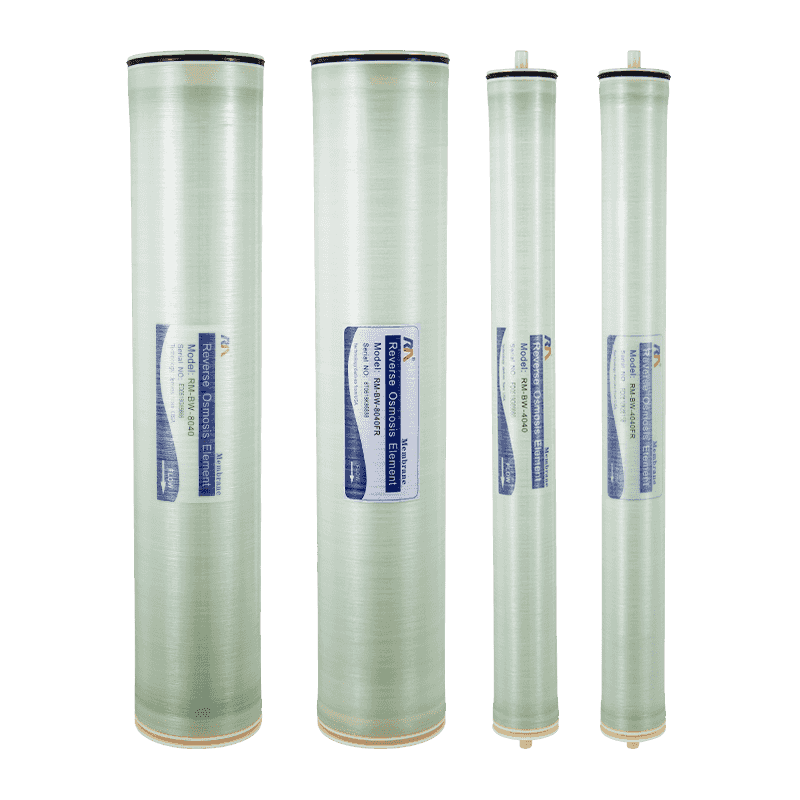
BW membranes, or Brackish Water membranes, are specialized reverse osmosis (RO) components designed to treat water with a moderate concentration of dissolved solids. While seawater membranes are built for extreme salt levels and tap water filters are meant for low-level polishing, BWRO membranes occupy the critical middle ground. They are engineered to handle Total Dissolved Solids (TDS) levels typically ranging from 1,000 to 10,000 ppm. By applying pressure to the source water, these membranes force pure water molecules through a semi-permeable polyamide layer while rejecting salts, minerals, and organic contaminants. This makes them the workhorse of industrial and municipal water purification systems worldwide.
Key Technical Advantages of Brackish Water RO Systems
The primary reason manufacturers and municipalities select BW membranes is their balance of high flux and high salt rejection. Unlike other filtration methods, modern brackish water elements are designed to operate at relatively lower pressures while still achieving rejection rates often exceeding 99%. This efficiency directly translates to lower energy consumption and reduced operational costs for the facility.
- High Salt Rejection: Ensures that the permeate water meets strict purity standards for boiler feed or drinking water.
- Energy Efficiency: Optimized for lower operating pressures compared to seawater desalination membranes.
- Fouling Resistance: Many high-grade BW membranes feature specialized spacers that reduce the accumulation of biological and colloidal matter.
- Standardized Sizing: Usually available in 4-inch and 8-inch diameters, making them easy to retrofit into existing pressure vessels.
Common Applications for BWRO Membranes
Brackish water sources are found in various environments, including underground aquifers, rivers, and industrial process streams. Consequently, the use of BW membranes spans several diverse sectors where water quality is non-negotiable.
Industrial Boiler Feed Water
High-pressure boilers require water with extremely low mineral content to prevent scaling and corrosion. BW membranes act as a primary demineralization step, removing the bulk of dissolved ions before the water enters ion-exchange resins or electrodeionization (EDI) systems. This significantly extends the life of downstream equipment.
Agricultural Irrigation
In regions where groundwater has become too salty for crops, BWRO systems are used to "sweeten" the water. By reducing the salinity to a level safe for sensitive plants, these membranes help maintain agricultural productivity in arid climates where freshwater is scarce.
Comparing Standard vs. Low-Energy BW Membranes
When purchasing BW membranes, it is essential to distinguish between high-rejection models and low-energy (LE) models. The choice depends on whether your priority is the absolute purity of the water or the reduction of electrical overhead.
| Membrane Type |
Operating Pressure |
Avg. Rejection Rate |
Best Use Case |
| High Rejection BW |
225 psi (15.5 bar) |
99.5% - 99.8% |
High-purity industrial use |
| Low Energy (LE) |
150 psi (10.3 bar) |
99.0% - 99.3% |
Large scale municipal water |
| Extra Low Energy |
100 psi (6.9 bar) |
~98.5% |
Light commercial/Home RO |
Maintenance and Cleaning for Longevity
To keep BW membranes performing at peak efficiency, a proactive maintenance schedule is required. Over time, the surface of the membrane will inevitably accumulate minerals (scaling) or organic matter (fouling). If left untreated, this leads to a "flux decline," where the system requires more pressure to produce the same amount of water.
- Pre-filtration: Always use sediment filters and carbon blocks to protect the BW membranes from chlorine and large particles.
- Antiscalant Dosing: Injecting antiscalants into the feed water prevents calcium carbonate and sulfate from crystallizing on the membrane surface.
- CIP (Clean-In-Place): Perform regular chemical cleanings using acidic cleaners for scale and alkaline cleaners for organic buildup before the feed pressure increases by 15%.
- Monitoring: Keep a daily log of permeate flow, salt rejection, and differential pressure to catch performance trends early.



 English
 عربى
عربى