English
 عربى
عربى
News
Home / News / Industry News / Nano Filtration Membrane Explained: How It Works, What It Removes, and How to Choose the Right One
Content
A nano filtration membrane is a semi-permeable pressure-driven separation membrane that occupies the performance space between ultrafiltration (UF) and reverse osmosis (RO) in the spectrum of membrane filtration technologies. Nanofiltration membranes have effective pore sizes in the range of approximately 0.5–2 nanometers (nm) — far too small to be observed with conventional microscopy — and operate at applied pressures typically between 3 and 20 bar (45–290 psi). These membranes selectively reject dissolved organic molecules, divalent and multivalent ions (such as calcium, magnesium, sulfate, and hardness-causing salts), and certain monovalent ions while allowing water and small monovalent ions like sodium chloride to pass through with relatively low resistance.
The defining characteristic that distinguishes a nanofiltration membrane from other membrane types is its unique dual selectivity mechanism. Unlike reverse osmosis membranes, which reject virtually all dissolved solutes through a size exclusion mechanism alone, nanofiltration membranes combine size-based exclusion with charge-based (Donnan exclusion) rejection. The active layer of most commercial NF membranes carries a net negative surface charge under typical operating pH conditions, which electrostatically repels negatively charged multivalent ions (such as sulfate SO₄²⁻ and carbonate CO₃²⁻) and divalent cations (Ca²⁺, Mg²⁺) far more effectively than it repels monovalent ions (Na⁺, Cl⁻). This charge-based selectivity is what enables nanofiltration membranes to soften water — removing hardness ions — without removing the beneficial mineral content or requiring the extremely high operating pressures of reverse osmosis systems.
Understanding the physical and chemical mechanisms by which a nanofiltration membrane separates dissolved species from water is essential for predicting membrane performance, selecting the right membrane for a specific application, and diagnosing performance problems when they arise. NF membrane separation operates through three primary mechanisms acting simultaneously:
The most intuitive separation mechanism is physical size exclusion — molecules and ions larger than the membrane's effective pore diameter cannot pass through and are rejected. For nanofiltration membranes, this means that dissolved organic molecules with molecular weights above approximately 200–1000 Daltons (the membrane's molecular weight cutoff, or MWCO) are effectively retained on the feed side of the membrane. This property makes NF membranes highly effective at removing natural organic matter (NOM), disinfection byproduct precursors, pesticides, pharmaceuticals, and micropollutants from water sources, as these compounds typically have molecular weights well above the MWCO of most commercial NF membranes.
The charged nature of the NF membrane's active layer creates an electrostatic barrier — known as the Donnan potential — that selectively impedes the passage of ions based on their charge valence. For a negatively charged NF membrane, divalent anions (SO₄²⁻, CO₃²⁻, HPO₄²⁻) experience strong electrostatic repulsion and are rejected at rates of 85–99%, while monovalent anions (Cl⁻, NO₃⁻) experience much weaker repulsion and may pass through at rejection rates of only 10–50% depending on the specific membrane and operating conditions. This charge-based selectivity is the dominant mechanism for ion separation in NF and explains why NF membranes can remove hardness ions while maintaining sodium chloride passage — a performance profile that no physical sieving mechanism alone could achieve.
A third, less intuitive mechanism contributing to NF membrane selectivity is dielectric exclusion, which arises from the difference in dielectric constant between the water inside the membrane pores and the bulk solution. Within the nanometer-scale pores of an NF membrane, water molecules are structured differently than in bulk solution, creating an energetic barrier to ion partitioning into the membrane. Dielectric exclusion is particularly significant for highly charged ions and contributes to the rejection of multivalent salts even in cases where the membrane carries little net surface charge, such as at the membrane's isoelectric point or in low-pH operating conditions.
Nanofiltration sits at a specific position in the hierarchy of pressure-driven membrane processes, and understanding how it compares to adjacent technologies helps engineers and water treatment professionals select the most appropriate membrane process for their specific separation challenge:
| Property | Microfiltration (MF) | Ultrafiltration (UF) | Nanofiltration (NF) | Reverse Osmosis (RO) |
| Pore Size | 0.1–10 µm | 0.01–0.1 µm | 0.5–2 nm | <0.5 nm |
| Operating Pressure | 0.1–2 bar | 1–5 bar | 3–20 bar | 15–80 bar |
| Salt Rejection | Negligible | Negligible | Moderate–High (divalent) | Very High (>98%) |
| Organic Rejection (MW>300 Da) | Low | Moderate | High (85–99%) | Very High (>99%) |
| Water Permeability | Very High | High | Moderate–High | Low–Moderate |
| Energy Consumption | Very Low | Low | Moderate | High |
| Primary Application | Particle removal | Macromolecule separation | Softening, NOM removal | Desalination |
The practical implication of this positioning is that nanofiltration membranes fill a specific and valuable niche: they can remove the contaminants that UF cannot (dissolved organics, hardness ions, color, micropollutants) while operating at significantly lower pressures and energy consumption than RO, and without removing the beneficial minerals that RO strips from water. For many water treatment applications — particularly drinking water softening, surface water treatment, and industrial process water purification — nanofiltration offers the optimal balance of separation performance and operating cost.
Commercial nanofiltration membranes are manufactured from a range of polymer and inorganic materials using different fabrication techniques, each producing membranes with distinct performance characteristics, chemical compatibility profiles, and application suitabilities.
The dominant material platform for commercial NF membranes is the polyamide thin-film composite structure, in which an ultra-thin aromatic polyamide selective layer (approximately 100–300 nm thick) is interfacially polymerized directly onto the surface of a microporous polysulfone or polyethersulfone support membrane, which is in turn cast onto a nonwoven polyester fabric backing. The polyamide active layer provides the separation functionality — its charge, pore size, and crosslink density determine the membrane's rejection profile. TFC NF membranes offer high water permeability, excellent rejection of divalent ions and organic compounds, and good chemical stability over a wide pH range (3–10 for most commercial products). They are, however, susceptible to oxidative degradation by free chlorine, requiring dechlorination of feed water before the membrane system.
Sulfonated polyethersulfone (SPES), sulfonated polysulfone (SPS), and sulfonated polyimide membranes incorporate sulfonic acid groups (-SO₃H) directly into the polymer backbone, introducing permanent negative surface charge that enhances Donnan exclusion of multivalent ions. These membranes offer improved charge-based selectivity compared to neutral polymer membranes and are particularly effective at divalent/monovalent ion fractionation applications in the food and beverage, pharmaceutical, and chemical processing industries where selective ion separation rather than complete rejection is the objective.
Inorganic ceramic NF membranes based on alumina (Al₂O₃), titania (TiO₂), zirconia (ZrO₂), or silica (SiO₂) offer exceptional chemical, thermal, and mechanical stability compared to polymer alternatives. Ceramic NF membranes can withstand aggressive chemical cleaning with strong acids, bases, and oxidizing agents at elevated temperatures — operating conditions that would destroy polyamide TFC membranes within hours. They are used in applications involving highly aggressive feed streams such as solvent filtration, high-temperature process streams, and feed waters requiring frequent harsh chemical cleaning regimes. The significant cost premium of ceramic NF membranes over polymer alternatives limits their application to situations where the performance advantages justify the investment.
An active area of nanofiltration membrane research involves the incorporation of nanoscale functional materials — including zeolites, metal-organic frameworks (MOFs), graphene oxide nanosheets, carbon nanotubes, and aquaporin protein channels — into conventional polymer membrane matrices. These mixed matrix or nanocomposite NF membranes aim to transcend the permeability-selectivity trade-off inherent in conventional polymer membranes by creating additional, highly selective transport pathways through the incorporated nanostructures. Several nanocomposite NF membrane products have already reached commercial scale, particularly aquaporin-based membranes for high-purity water applications, and the field continues to advance rapidly as manufacturing scale-up challenges are progressively resolved.
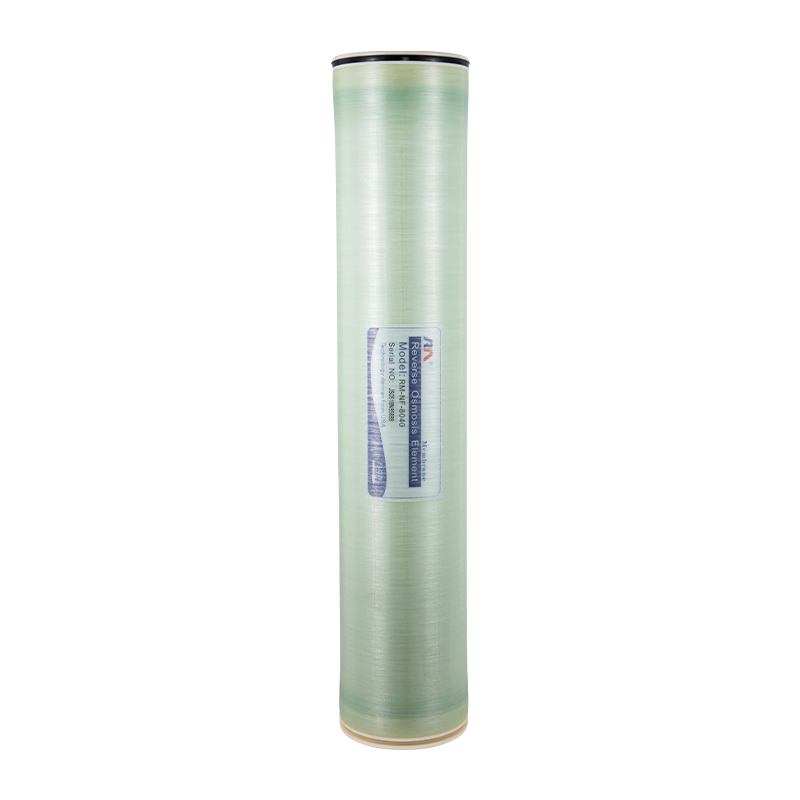
The unique performance profile of NF membranes — selective rejection of multivalent ions and dissolved organics with moderate monovalent ion passage, at intermediate energy consumption — has generated a broad and growing range of industrial, municipal, and specialty applications worldwide.
Nanofiltration membrane systems are widely used in municipal drinking water treatment for the simultaneous removal of hardness (calcium and magnesium ions), natural organic matter, color, taste and odor compounds, disinfection byproduct precursors, and micropollutants including pesticides, pharmaceuticals, and endocrine disrupting compounds. NF is particularly effective in treating groundwaters with high hardness and organic content, and surface waters with high color and seasonal micropollutant loading. Unlike conventional lime-soda softening, NF softening does not require chemical addition or sludge management, and unlike RO, it produces a permeate that retains a balanced mineral content without requiring remineralization for taste acceptability. Full-scale NF drinking water plants treating hundreds of thousands of cubic meters per day are in operation across Europe, North America, and increasingly in Asia and the Middle East.
In industrial applications, nanofiltration membranes are used to purify process water for boiler feed, cooling water makeup, pharmaceutical manufacturing, semiconductor fabrication, and food and beverage production. For boiler feed water preparation, NF removes the hardness ions that cause scale formation in boilers and heat exchangers at significantly lower energy cost than RO, and with better rejection of silica and sulfates that cause fouling and corrosion in high-pressure steam systems. In the dairy industry, NF is used for milk protein concentration, lactose partial demineralization, and whey processing, where its selective ion passage properties allow salt reduction while retaining valuable lactose and organic components.
Nanofiltration plays an increasingly important role in advanced wastewater treatment and water reuse applications. NF membranes are used as a tertiary treatment step to remove emerging contaminants — including pharmaceuticals, personal care products, hormones, and industrial micropollutants — from secondary treated municipal wastewater before discharge or reuse. In industrial wastewater treatment, NF is used for the concentration and recovery of valuable compounds from process effluents, including the recovery of metal ions from electroplating rinse water, the concentration of dyes and auxiliaries from textile dyeing effluents, and the purification of process condensates for reuse.
The food and beverage industry extensively uses nanofiltration membranes for concentration, fractionation, purification, and desalination of process streams. In the sugar industry, NF is used to purify and concentrate sugar solutions, removing color bodies and divalent ions that interfere with crystallization. In the wine and fruit juice industry, NF membranes selectively remove polyphenols and reduce astringency without stripping flavor compounds. In the pharmaceutical and nutraceutical industries, NF is used to concentrate and purify active compounds, remove low-molecular-weight impurities, and exchange buffers in bioprocess streams. The ability of NF membranes to fractionate complex mixtures by both molecular size and charge makes them uniquely valuable in these selective purification applications.
Textile dyeing operations generate large volumes of highly colored, chemically complex effluent containing reactive dyes, surfactants, salts, and auxiliaries. Nanofiltration membranes effectively concentrate and recover reactive dyes (molecular weight typically 600–1500 Da) while allowing the high-concentration salt (NaCl, Na₂SO₄) used in the dyeing process to pass through, enabling both dye recovery for reuse and salt recovery for process recycling. This dual recovery capability makes NF an economically attractive component of textile effluent management systems in regions where discharge regulations are tightening and water and chemical costs are significant.
Evaluating and comparing nanofiltration membrane products requires understanding the key performance metrics used to characterize membrane behavior. These parameters are reported in manufacturer datasheets and measured during performance testing:
Membrane fouling — the accumulation of rejected materials on or within the membrane surface — is the most significant operational challenge in nanofiltration systems, causing progressive flux decline, increased operating pressure, reduced permeate quality, and shortened membrane service life. Understanding fouling mechanisms and implementing effective prevention and cleaning strategies is essential for maintaining NF system performance and economics.
NF membrane fouling is classified into four main categories based on the nature of the foulant. Scaling (inorganic fouling) occurs when sparingly soluble mineral salts — primarily calcium carbonate, calcium sulfate, silica, and barium sulfate — exceed their solubility limits at the membrane surface due to concentration polarization and precipitate as crystalline deposits. Organic fouling involves the adsorption and accumulation of natural organic matter, humic substances, proteins, polysaccharides, and surfactants on the membrane surface and within membrane pores. Colloidal fouling is caused by the deposition of colloidal particles (iron hydroxides, silica colloids, clay particles) that form a compressible cake layer on the membrane surface. Biofouling occurs when bacteria in the feed water colonize the membrane surface and form a structured biofilm that is highly resistant to hydraulic cleaning and chemical disinfection.
Effective fouling prevention in NF systems begins with thorough feed water characterization and pretreatment design. Standard pretreatment for NF systems typically includes coagulation/flocculation and media filtration or ultrafiltration to remove suspended solids and colloids, cartridge filtration (5–10 µm) as a final particulate barrier, antiscalant dosing to inhibit scaling by calcium carbonate, sulfate, and silica, and pH adjustment to optimize both antiscalant performance and membrane charge. Maintaining appropriate cross-flow velocity within the membrane modules helps minimize concentration polarization — the buildup of rejected solutes at the membrane surface that drives both scaling and organic fouling — through turbulent mixing of the boundary layer.
When hydraulic flushing cannot restore membrane flux, chemical cleaning is performed using cleaning solutions targeted at the specific foulant type. Acid cleaning (citric acid, hydrochloric acid, or sulfamic acid solutions at pH 2–4) dissolves carbonate and metal oxide scales. Alkaline cleaning (sodium hydroxide solutions at pH 11–12, often combined with surfactants and chelating agents such as EDTA) removes organic foulants, biofilm, and silica deposits. For biofouling, sodium hypochlorite solutions can be used as a biocide, though contact time and concentration must be carefully controlled to avoid oxidative damage to polyamide membranes — many NF membrane manufacturers specify maximum chlorine exposure limits of 1000–5000 ppm·hours lifetime. Enzymatic cleaning formulations are increasingly used as a membrane-safe alternative for biofilm removal.
Choosing the most appropriate nanofiltration membrane from the wide range of commercial products available requires a systematic evaluation process that matches membrane performance characteristics to the specific separation requirements, feed water chemistry, and operational constraints of the application. The following checklist covers the key selection criteria: