English
 عربى
عربى
News
Home / News / Industry News / NF Membranes: Practical Design, Selection, and Performance Optimization for Modern Separation Needs
Content
NF membranes (Nanofiltration membranes) are pressure-driven separation membranes positioned between ultrafiltration and reverse osmosis. They are specifically designed to reject divalent and multivalent ions while allowing most monovalent salts and low-molecular-weight organics to pass. This unique selectivity is driven by a combination of pore size (typically around 1 nanometer) and surface charge effects, making NF membranes ideal for partial desalination, hardness removal, and selective contaminant separation.
In practical applications, NF membranes operate at relatively low pressures compared to RO systems, which directly translates into lower energy consumption. Their ability to balance permeability and selectivity makes them a preferred choice where complete salt rejection is unnecessary but targeted removal is critical.
Most commercial NF membranes are fabricated from thin-film composite (TFC) polyamide layers supported by a porous substrate. This layered structure ensures high flux while maintaining mechanical stability under operating pressure. Material selection directly influences chemical resistance, fouling behavior, and service life.
NF membranes are chosen for applications that demand selective separation rather than absolute purification. Their versatility allows them to be integrated into municipal, industrial, and commercial treatment systems with minimal complexity.
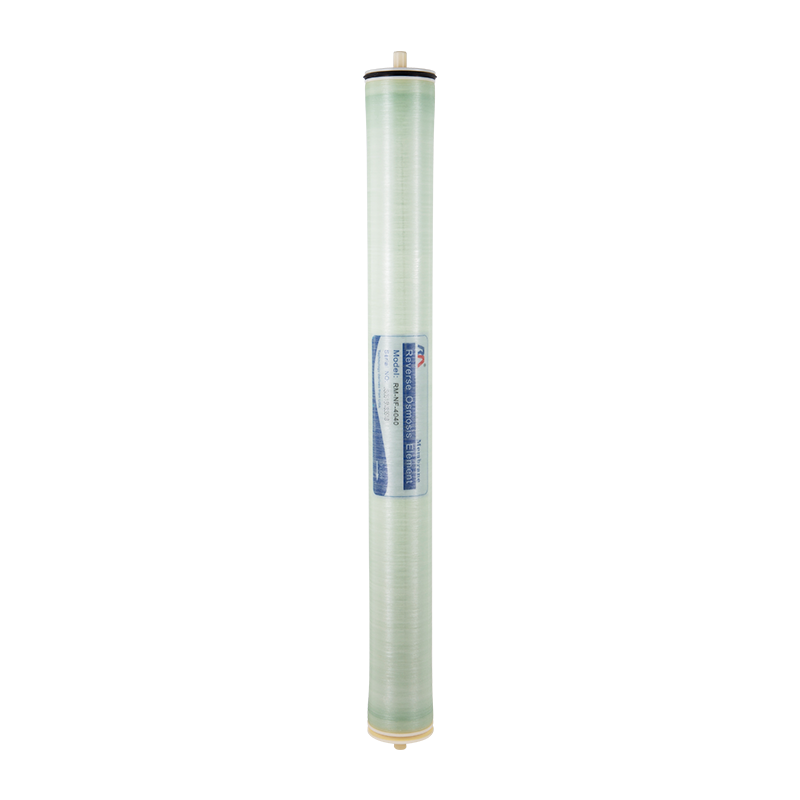
The real-world efficiency of NF membranes depends heavily on operating conditions. Feed water quality, pressure, temperature, and pH must be matched with membrane specifications to avoid premature performance loss.
| Operating Pressure | Directly influences flux and energy consumption |
| pH Range | Affects membrane charge and chemical stability |
| Temperature | Higher temperatures increase flux but reduce membrane lifespan |
| Feed TDS | Impacts osmotic pressure and rejection efficiency |
Fouling remains the primary operational challenge for NF membranes. Organic matter, scaling ions, and biological growth can reduce flux and alter rejection characteristics if not properly managed.
Selecting an NF membrane should be driven by separation goals rather than brand preference. Understanding target ion rejection, desired recovery rate, and system constraints ensures optimal lifecycle cost and performance.
By aligning membrane characteristics with actual process requirements, NF membranes can deliver stable, energy-efficient, and scalable separation solutions across a wide range of industries.