English
 عربى
عربى
News
Home / News / Industry News / Sea Water Membranes Explained: How They Turn Seawater into Fresh Water
Content
Sea water membranes are specialized filtration materials designed to remove salt, minerals, and impurities from seawater. They are the core component of modern seawater desalination systems, especially reverse osmosis (RO) plants. Without high-performance sea water membranes, turning seawater into safe drinking or industrial-use water would be inefficient, costly, or even impossible.
Compared with brackish water membranes, sea water RO membranes must withstand much higher salinity, pressure, and fouling risks. This makes membrane material selection, structure, and operating conditions extremely important in real-world applications.
Sea water membranes operate primarily through reverse osmosis. High-pressure pumps force seawater against a semi-permeable membrane surface. Water molecules pass through the membrane, while dissolved salts, bacteria, and organic matter are rejected and flushed away as concentrated brine.
Different seawater applications require different membrane designs. While most systems rely on thin-film composite (TFC) membranes, performance varies depending on energy efficiency and fouling resistance.
| Membrane Type | Main Advantage | Typical Application |
| Standard SWRO Membranes | High salt rejection | Municipal desalination plants |
| Low-Energy SW Membranes | Reduced power consumption | Island and remote systems |
| High-Fouling-Resistance Membranes | Longer service life | Industrial intake seawater |
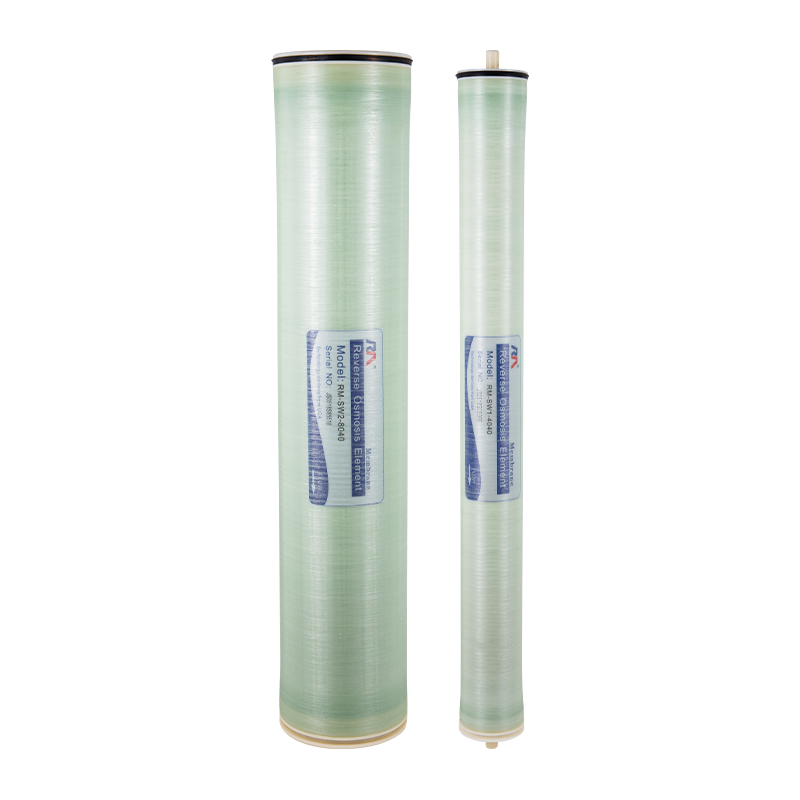
Selecting the right sea water membrane directly affects system reliability, operating cost, and water quality. Performance should be evaluated under actual seawater conditions, not just laboratory data.
Sea water membranes are widely used across industries where freshwater access is limited or unreliable. Their modular design allows systems to scale from small installations to massive desalination plants.
Proper operation and maintenance significantly extend the life of sea water membranes. Pretreatment quality, pressure control, and regular cleaning schedules all play a role in membrane longevity.
Under stable conditions, seawater RO membranes typically last 3–5 years. However, poor pretreatment or aggressive fouling can shorten service life dramatically, increasing operating costs.
Advances in material science are pushing sea water membranes toward higher permeability and lower energy use. New surface coatings and improved polymer structures aim to reduce fouling while maintaining strong salt rejection.
As water scarcity increases globally, sea water membranes will continue to evolve as a key technology for sustainable freshwater production.