What NF Membranes Are Designed to Do
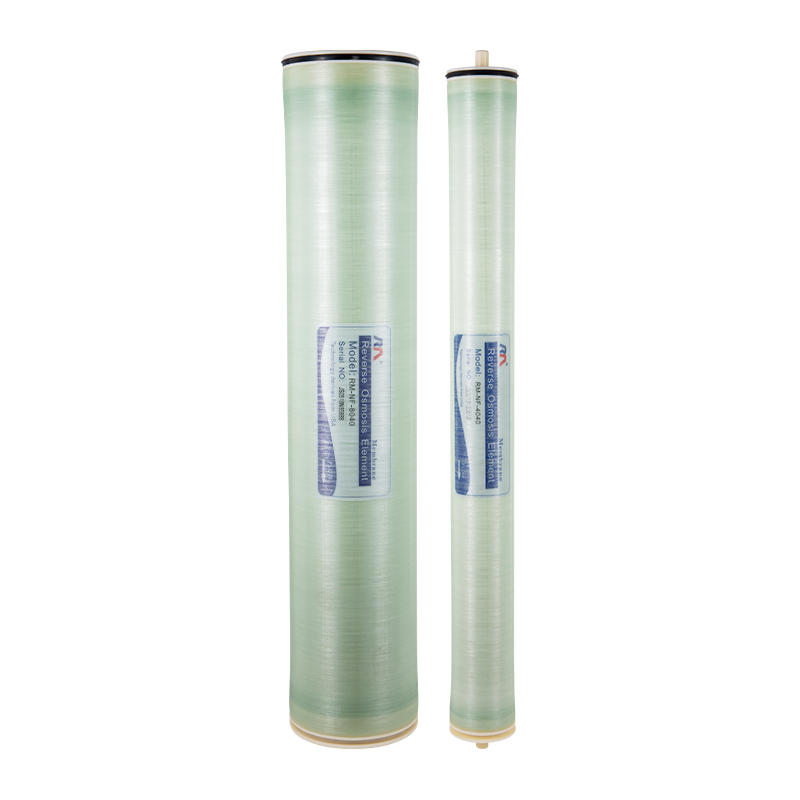
NF membranes, short for nanofiltration membranes, are pressure-driven filtration membranes positioned between reverse osmosis (RO) and ultrafiltration (UF). They are mainly used to remove divalent ions, organic compounds, color, and hardness while allowing most monovalent salts to pass through.
Because of this selective separation ability, NF membrane filtration is widely applied where partial desalination or water softening is required without the high energy cost of full RO systems.
How NF Membrane Filtration Works in Practice
Nanofiltration membranes work by applying moderate pressure to push water through a semi-permeable membrane layer. The membrane structure rejects larger molecules and multivalent ions such as calcium, magnesium, and sulfate while permitting smaller monovalent ions like sodium and chloride.
Typical Operating Conditions
- Operating pressure usually ranges from 3 to 10 bar
- Salt rejection varies based on ion valence
- Lower energy consumption compared to RO membranes
Key Contaminants Removed by NF Membranes
NF membranes are especially effective in applications where complete desalination is not required. Their selectivity makes them ideal for removing problematic substances without stripping beneficial minerals entirely.
| Contaminant Type |
Removal Efficiency |
Typical Use Case |
| Calcium & Magnesium |
High |
Water softening |
| Organic Matter |
Moderate to High |
Color and odor control |
| Sulfates |
High |
Industrial water reuse |
Common Applications of NF Membranes
Due to their balance between performance and cost, NF membranes are used across municipal and industrial sectors where selective separation is critical.
- Drinking water softening systems
- Food and beverage processing
- Textile and dye wastewater treatment
- Pre-treatment before RO systems
Maintenance Tips for Long-Term NF Membrane Performance
Maintaining NF membranes requires consistent pretreatment, pressure control, and periodic chemical cleaning. Fouling from organics or scaling from hardness ions can reduce flux if not properly managed.
With proper operation, nanofiltration membranes typically offer a service life of 3 to 5 years in stable water conditions.



 English
 عربى
عربى