English
 عربى
عربى
News
Home / News / Industry News / The Water Revolution: How Ultra Low Pressure Membranes Are Redefining Clean Water
Content
The need for clean, reliable water is one of the defining challenges of our time. While technologies like reverse osmosis (RO) have been a lifeline, especially for transforming seawater into drinking water, they come with a hefty price tag: high energy consumption. Conventional water purification often requires massive pumps to force water through fine filters at intense pressure—a continuous, expensive, and energy-intensive squeeze.
Enter the next generation of filtration technology: Ultra Low Pressure Membranes. These sophisticated barriers are fundamentally changing the economics of water purification by dramatically reducing the energy required for the “squeeze,” making clean water more accessible and sustainable.
Membrane filtration relies on a deceptively simple principle: using a semi-permeable barrier to separate water molecules from contaminants. To appreciate the power of the ultra-low pressure approach, it helps to understand the traditional processes it is advancing.
Water treatment membranes are categorized by the size of the particles they block:
In nature, osmosis causes water to flow from a low-salt area to a high-salt area to equalize concentration, creating a natural pressure (osmotic pressure). Reverse osmosis works by applying an external force greater than this natural osmotic pressure to push the water in the opposite direction—from the concentrated (dirty) side to the pure side. This force has historically meant systems operate at hundreds of pounds per square inch (psi).
The core breakthrough in Ultra Low Pressure Membranes (ULPMs) lies in the chemistry and structure of the membrane material itself. Scientists have engineered new polymer composites with higher intrinsic permeability, meaning water can pass through more easily and at faster rates (higher flux) than in previous generations of membranes, all while maintaining high contaminant rejection.
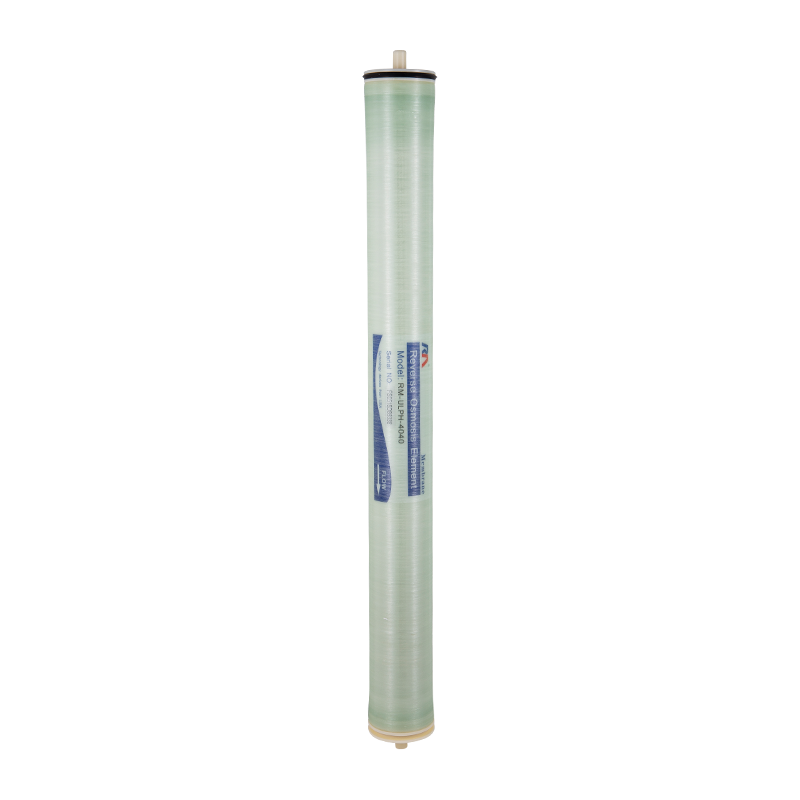
By improving the membrane’s fundamental material, the energy required to “push” the water drops significantly. For brackish (slightly salty) water treatment, conventional RO might require 150 to 225 psi, but modern ULPM systems can operate as low as 60 to 100 psi, or even lower in some applications.
The benefits are game-changing:
The reduced cost and complexity of ULPMs are opening up water treatment options in sectors where high-pressure systems were previously impractical or uneconomical.
By merging sophisticated material science with a foundational process like reverse osmosis, Ultra Low Pressure Membranes provide a viable, economic, and energy-efficient pathway to address the growing global demand for clean water, turning the high-cost challenge of water scarcity into an opportunity for sustainable innovation.