English
 عربى
عربى
News
Home / News / Industry News / A Deep Dive into High-Performance BW Membranes for Industrial Water Treatment
Content
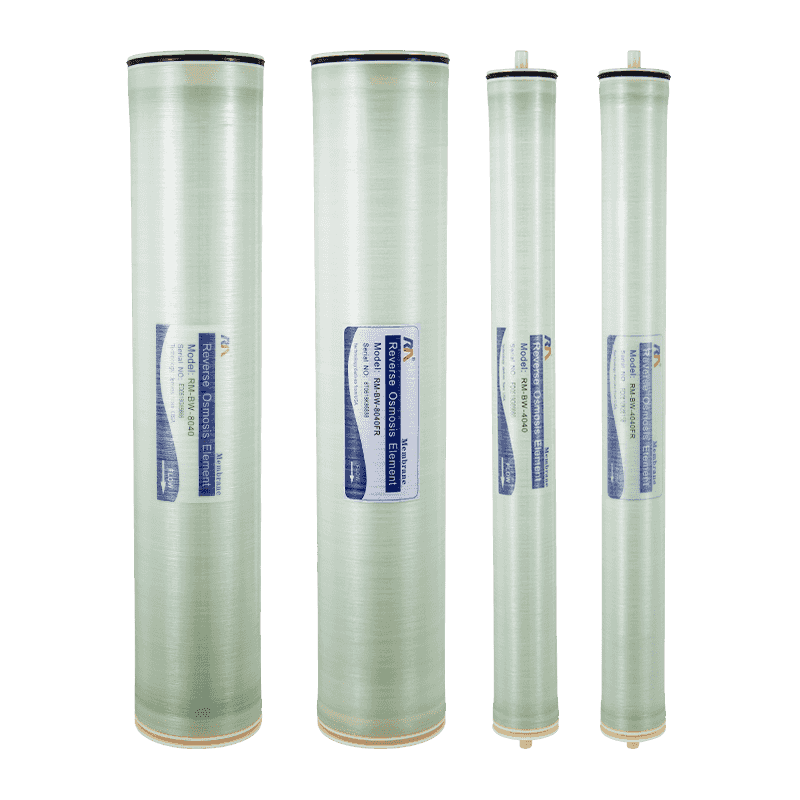
Brackish Water (BW) membranes are specialized reverse osmosis elements designed specifically to treat water with moderate concentrations of dissolved solids, typically ranging from 1,000 to 10,000 mg/L. Unlike seawater membranes that require extreme pressures to overcome high osmotic forces, BW membranes are engineered for high permeability and flux at lower operating pressures. This makes them the industry standard for purifying well water, surface water, and industrial process water where high-quality permeate is required for boilers, cooling towers, or manufacturing processes.
The architecture of a modern BW membrane typically consists of a thin-film composite (TFC) structure. This includes a dense polyamide barrier layer that rejects salts and organics, supported by a microporous polysulfone layer and a non-woven polyester base. This layered approach ensures that the membrane can withstand hydraulic pressure while maintaining a high salt rejection rate, often exceeding 99.5% in premium models.
Selecting the right BW membrane requires a detailed analysis of its performance characteristics. Engineers must balance the feed water salinity with the desired recovery rate and energy consumption. High-rejection variants are prioritized when the target is ultra-pure water, while low-energy variants are selected to reduce the Carbon footprint of the treatment facility.
| Parameter | Standard BW Membrane | Low Energy (LE) BW |
| Operating Pressure | 225 psi (15.5 bar) | 150 psi (10.3 bar) |
| Salt Rejection | 99.5% - 99.7% | 99.0% - 99.3% |
| Feed Space Wrapper | 28 - 34 mil | 34 mil (Foulant Resistant) |
The lifespan of BW membranes is heavily dictated by the efficacy of the pretreatment system and the consistency of the Cleaning-in-Place (CIP) protocols. Because brackish water sources often contain high levels of silica, calcium carbonate, and organic matter, these membranes are susceptible to scaling and biofouling. Implementing a robust antiscalant dosing system is essential to prevent mineral precipitation on the membrane surface.
The latest generation of BW membranes focuses on increasing active surface area without expanding the physical footprint of the 8-inch or 4-inch elements. By using thinner spacers and more efficient leaf designs, manufacturers can pack more membrane material into a single pressure vessel. This allows for higher permeate production within the same spatial constraints, which is vital for plants looking to upgrade capacity without building new infrastructure.
Furthermore, advancements in nanotechnology have led to the development of "smart" membranes with enhanced chlorine tolerance and smoother surface topologies. A smoother surface reduces the "anchor points" for bacteria and colloidal particles, significantly extending the intervals between chemical cleanings and reducing the overall operational cost of the water treatment system.
Choosing the correct BW membrane is not just a technical decision but a financial one. While premium membranes may have a higher initial procurement cost, their ability to operate at lower pressures can result in thousands of dollars in annual energy savings. Additionally, membranes with higher durability reduce the frequency of replacement, which minimizes downtime and labor costs associated with membrane extraction and loading.
In industrial sectors such as semiconductor manufacturing or pharmaceuticals, where water quality is tied directly to product yield, the reliability of BW membranes is paramount. High-rejection BW elements ensure that the downstream deionization (DI) or electrodeionization (EDI) systems are not overloaded, thereby protecting the most expensive components of the water train.