English
 عربى
عربى
News
Home / News / Industry News / High-Performance Industrial Membranes: Advancing Precision Separation in Modern Manufacturing
Content
Industrial membrane technology has transitioned from simple filtration tools to highly engineered barriers capable of molecular-level separation. Unlike traditional thermal separation methods, such as distillation, membranes operate based on physical or chemical gradients, significantly reducing energy consumption. These systems utilize semi-permeable materials to selectively allow specific molecules or ions to pass through while retaining others. The choice of membrane—ranging from polymeric to ceramic—depends heavily on the chemical environment, temperature, and the specific size of the particles targeted for removal.
Today's industrial membranes are characterized by their high flux rates and chemical resistance. Manufacturers focus on optimizing the morphology of the membrane surface to prevent fouling, which is the accumulation of unwanted particles that can degrade performance over time. By implementing advanced coatings and tailored pore structures, these membranes can withstand aggressive cleaning cycles and harsh industrial solvents, making them indispensable in sectors like pharmaceuticals, petrochemicals, and large-scale water desalination.
Selecting the correct industrial membrane requires a deep understanding of the separation mechanism required for a specific application. Membranes are generally classified by the size of the particles they are designed to intercept. This hierarchy ensures that processes—from removing suspended solids to extracting dissolved salts—are handled with maximum efficiency and minimal pressure loss across the membrane module.
| Membrane Type | Pore Size Range | Primary Applications |
| Microfiltration (MF) | 0.1 – 10 μm | Bacteria removal, wastewater pretreatment |
| Ultrafiltration (UF) | 0.01 – 0.1 μm | Protein concentration, virus removal |
| Nanofiltration (NF) | 1 – 10 nm | Water softening, dye removal |
| Reverse Osmosis (RO) | < 1 nm | Desalination, ultrapure water production |
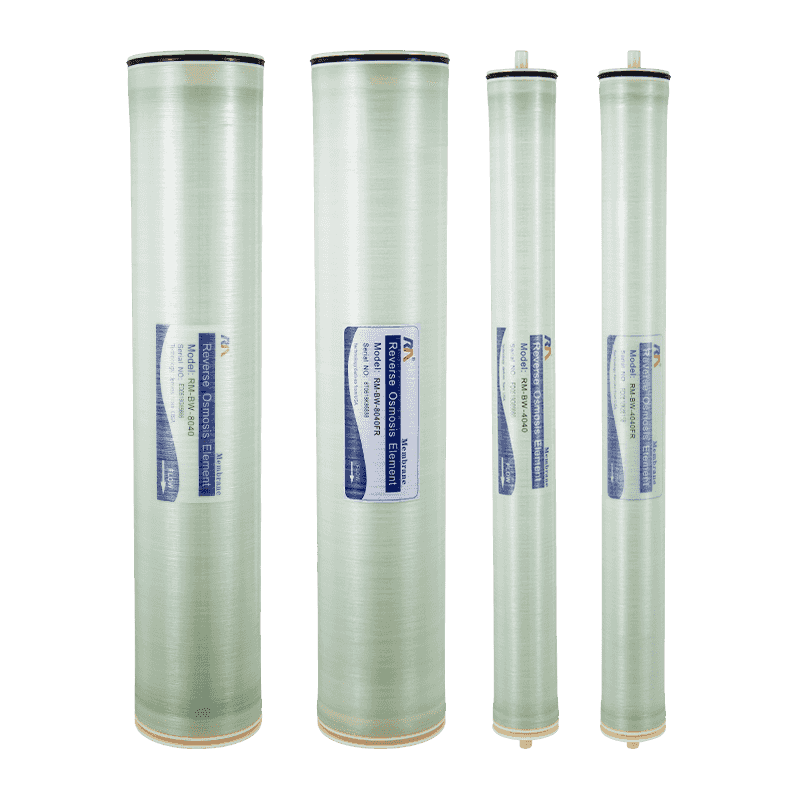
The performance of an industrial membrane is dictated by its material composition. While organic polymers remain the most common choice due to their flexibility and cost-effectiveness, inorganic materials like ceramics and metallic oxides are gaining ground in high-stress environments. These materials determine the membrane's thermal stability, pH tolerance, and mechanical strength, which are critical factors for long-term operational viability.
Polymeric membranes are widely used because they can be easily cast into various shapes, such as hollow fibers or flat sheets. Materials like Polysulfone (PSu), Polyethersulfone (PES), and Polyvinylidene fluoride (PVDF) are industry standards. They offer excellent versatility but may be limited by sensitivity to certain organic solvents or extreme temperatures, requiring careful selection based on the chemical compatibility of the feed stream.
For processes involving high temperatures or extreme pH levels, ceramic membranes (typically made from alumina, titania, or zirconia) are preferred. They provide superior structural integrity and can be steam-sterilized, making them ideal for the food and beverage industry. Though more expensive initially, their lifespan often exceeds that of polymeric alternatives by several years, providing a better long-term return on investment.
Maintaining the integrity of an industrial membrane system requires proactive management of the feed environment and cleaning protocols. Fouling—the primary cause of membrane failure—occurs when particles, fats, or mineral scales deposit on the membrane surface or within its pores. Effective operation relies on a combination of physical and chemical maintenance strategies to ensure consistent permeate quality and flow rates.
Industrial membranes play a pivotal role in the global shift toward a circular economy. Beyond simple waste treatment, membranes are increasingly used for resource recovery. For instance, in the mining industry, specialized membranes can extract valuable metals from tailings, while in the dairy industry, they facilitate the recovery of whey proteins that were previously discarded as waste. This ability to turn waste streams into revenue streams is driving the rapid adoption of membrane technology across diverse industrial landscapes.
Furthermore, the energy efficiency of membrane separation compared to traditional evaporation or distillation cannot be overstated. By eliminating the need for phase changes (boiling water), membranes allow factories to significantly reduce their carbon footprint. As environmental regulations tighten and water scarcity becomes a more pressing concern, the implementation of robust, high-performance industrial membranes will be a defining factor in sustainable industrial growth.