English
 عربى
عربى
News
Home / News / Industry News / ULP Membrane: What It Is, Where to Use It, and How Not to Waste Your Money on One
Content
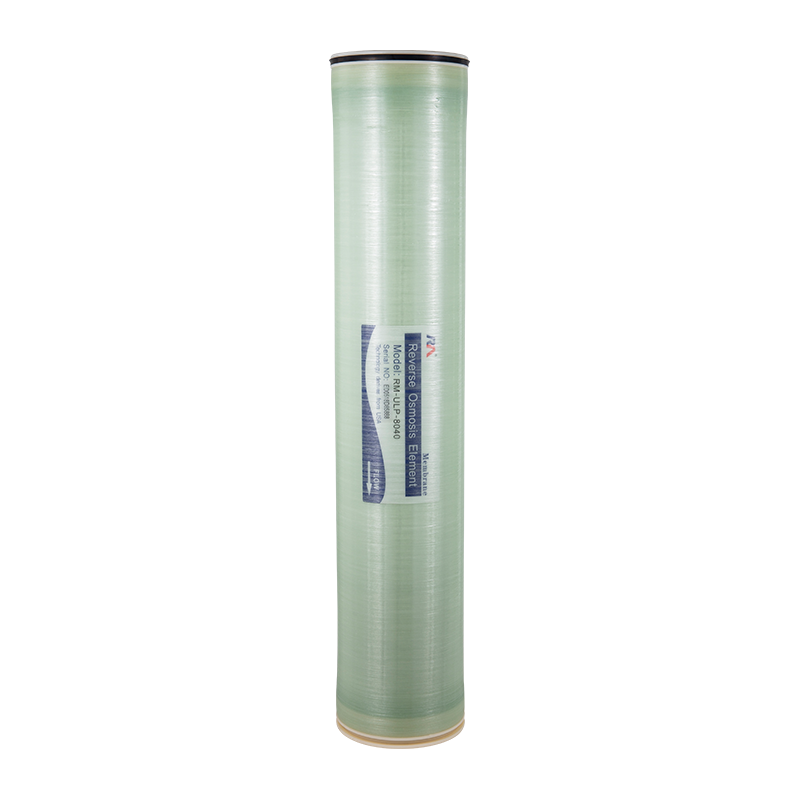
ULP stands for Ultra‑Low Pressure. In the world of reverse osmosis (RO) membranes, a ULP membrane is designed to operate at significantly lower feed pressures than standard brackish water membranes – typically 5 to 7 bar (75‑100 psi), compared to 10‑15 bar for conventional RO. That lower pressure means smaller pumps, less energy consumption, and lower operating costs. But here's the catch: ULP membranes aren't a universal upgrade. They work brilliantly for certain feed waters and fall flat on others. If you feed them the wrong water, you'll get low rejection, rapid fouling, or both. This guide tells you exactly when a ULP membrane makes sense – and when it's a waste of money.
On paper, the difference is just operating pressure. In practice, the membrane chemistry and structure are tuned differently. ULP membranes have a thinner active polyamide layer and a more porous support structure. This reduces hydraulic resistance, so water passes through with less force. The trade‑off? Slightly lower salt rejection (typically 99.0‑99.5% for ULP vs. 99.5‑99.7% for standard brackish membranes) and lower tolerance to chlorine and fouling. They're also more sensitive to feed temperature – a 10°C drop can push the required pressure up by almost 30%, erasing the energy benefit. So a ULP membrane isn't "better" – it's just optimized for low‑pressure operation. You choose it when your feed water is relatively clean (low SDI, low organics) and you want to minimize pumping energy.
Every ULP membrane has a sweet spot. Stray outside it, and performance deteriorates fast. Here are the key parameters you must monitor – and respect.
| Parameter | Recommended Range | What Happens If Exceeded |
| Feed pressure | 5‑7 bar (75‑100 psi) | Above 8 bar, flux increases but rejection drops; membrane compaction may occur |
| Feed temperature | 15‑30°C | Above 35°C: accelerated hydrolysis; below 5°C: pressure requirement doubles |
| Feed pH | 5‑8 | Below 4: polyamide layer degrades; above 9: scale risk increases |
| Maximum feed SDI (15 min) | < 3 | Above 3: colloidal fouling accelerates rapidly; cleaning frequency doubles |
| Free chlorine tolerance | 0 ppm (dechlorinated feed) | Any chlorine oxidizes the membrane – irreversible damage |
The most common mistake is assuming a ULP membrane can handle the same feed as a standard RO. It can't. ULP membranes are like high‑performance sports cars – they're brilliant on smooth roads but break down fast on rough terrain. If your feed water quality fluctuates, invest in better pretreatment or stick with a standard brackish membrane.
Not every application is a good fit. Here's a practical breakdown of where ULP membranes shine and where they disappoint.
If your feed water TDS is consistently below 1,500 ppm and you have good pretreatment (media filter + cartridge filter, SDI < 3), a ULP membrane is a solid choice. If not, stick with a standard brackish membrane – you'll spend less on cleaning chemicals and replacements over the membrane's life.
The headline benefit of ULP membranes is energy reduction. But let's put real numbers on it so you can decide if the switch is worth it. At a given flux (say 20 LMH) and feed TDS of 800 ppm, a standard brackish membrane might need 10‑11 bar, while a ULP membrane needs 6‑7 bar – about 35‑40% less pressure. Since pump power is directly proportional to pressure (and flow), that's roughly a 35‑40% reduction in pumping energy. For a 10 m³/h system running 8 hours a day, that's about 5‑10 kWh saved per day – which translates to hundreds of dollars a year in electricity, depending on your local rate.
But here's the fine print. To maintain that low pressure, you need to run at higher recovery (more water converted to permeate) – typically 70‑75% for ULP vs. 60‑65% for standard RO. That higher recovery means your concentrate is more concentrated, which increases scaling risk (calcium, silica, barium). You'll need to monitor LSI (Langelier Saturation Index) closely and add antiscalant more aggressively. If you have to reduce recovery back to 65% to avoid scaling, you lose the energy benefit. So the actual savings depend heavily on your water chemistry – not just the membrane spec.
If there's one rule for ULP membranes, it's this: pretreatment is everything. Because ULP membranes have a thinner, more open surface, they're more vulnerable to colloidal fouling and organic adsorption. A standard RO membrane might tolerate a feed SDI of 4 for months; a ULP membrane will show a pressure rise in weeks at the same SDI. Here's the pretreatment checklist you must meet before installing a ULP membrane.
If you can't meet these pretreatment conditions, don't use a ULP membrane – period. You'll spend more on cleanings and replacements than you'll save in energy.
ULP membranes are more sensitive to foulants, but they're also easier to clean than standard membranes – partly because the lower operating pressure means less compaction, and partly because the smoother surface releases foulants more readily. That said, you need a disciplined cleaning schedule to avoid permanent damage.
The golden rule: clean proactively, not reactively. If you wait until the flow has dropped 20%, you're already in the zone where foulants are starting to crystallize and bond permanently. A good schedule is every 3‑6 months, depending on feed quality – or whenever the two parameters above trigger.
Even with good practices, things go wrong. Here are the most frequent issues and what to do about them.
| Problem | Likely Cause | Solution |
| Permeate flow dropping fast | Colloidal fouling (SDI too high) or scale | Clean with alkaline (organics) then acid (scale); improve pre‑filtration |
| Permeate TDS increasing | Membrane oxidation (chlorine) or degradation | Check chlorine feed – if zero, replace membrane (irreversible) |
| Pressure rising without flow drop | Biological fouling or scale formation | Clean – acid for scale, alkaline with biocide for biofouling |
| Recovery lower than design | Concentrate scaling (LSI positive) | Reduce recovery, increase antiscalant, or add acid to lower pH |
| Permeate has salty taste/smell | O‑ring leak or membrane tear | Inspect O‑rings; if membrane is torn, replace the element |
Let's do a quick payback calculation for a typical 10 m³/h system running 3,000 hours a year, with feed TDS 800 ppm, electricity at $0.12/kWh.
Payback period: less than 6 months. After that, you're pocketing the difference. But this assumes your feed water meets ULP requirements and you don't increase cleaning frequency. If you need to clean twice as often (say, every 2 months instead of 4), the chemical costs and downtime could eat half the savings. So the real answer is: a ULP membrane is a great investmentifyou have clean, low‑TDS, temperature‑stable feed water and robust pretreatment. If not, stick with a standard membrane – the operational headache isn't worth the energy savings.
Use this checklist to make a confident decision – and to challenge any sales pitch that tries to sell you a ULP membrane for the wrong application.
A ULP membrane is a brilliant tool when matched to the right water and the right system. It can cut your energy bill, reduce your carbon footprint, and make your RO system more economical. But it's not a drop‑in replacement for every application. Do your homework, check your feed water chemistry, and you'll get years of trouble‑free, low‑pressure operation.