English
 عربى
عربى
News
Home / News / Industry News / Are Brackish Water Membranes the Ultimate Solution for Sustainable Freshwater?
Content
Brackish water membranes are specifically engineered thin-film composite (TFC) structures designed to treat water with a Total Dissolved Solids (TDS) concentration typically ranging from 1,000 to 10,000 mg/L. Unlike seawater membranes, which must withstand extreme osmotic pressures, brackish water reverse osmosis (BWRO) membranes are optimized for high permeability at lower operating pressures. The membrane consists of a dense polyamide barrier layer, a microporous polysulfone support layer, and a high-strength polyester backing. This layered architecture allows the membrane to effectively reject monovalent ions like sodium and chloride while maintaining a high flux rate, making them the industry standard for industrial process water, municipal drinking water upgrades, and boiler feed water pretreatment.
The performance of these membranes is governed by the solution-diffusion model, where water molecules migrate through the polymer matrix while dissolved salts are rejected at the surface. Modern advancements in nanotechnology have allowed manufacturers to modify the surface charge and smoothness of the polyamide layer. By creating a more hydrophilic and neutrally charged surface, these membranes can significantly reduce the rate of organic fouling, which is a common challenge when treating surface water or wastewater reclamation streams.
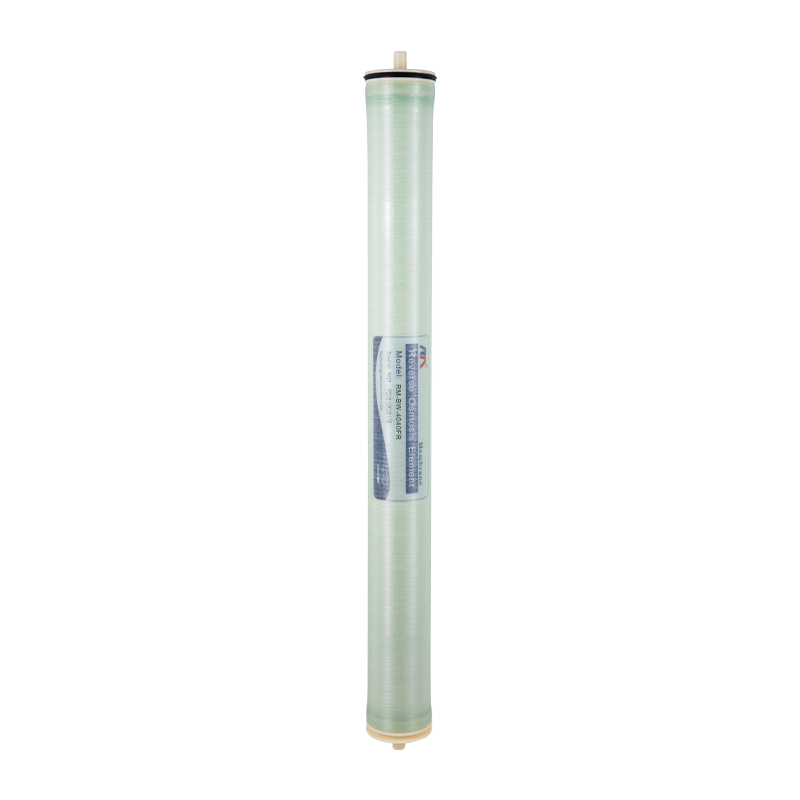
Selecting the correct brackish water membrane requires an analysis of rejection rates and energy requirements. While "High Rejection" models prioritize the removal of up to 99.7% of salts, "Low Energy" models are designed to operate at significantly reduced pressures to minimize operational expenditures (OPEX). The following table outlines the typical specifications found in standard 8-inch diameter BWRO elements used in industrial applications.
| Membrane Type | Salt Rejection (%) | Standard Pressure (PSI) | Typical Application |
| High Rejection (HR) | 99.5% - 99.8% | 225 | Ultrapure Water / Boiler Feed |
| Low Energy (LE) | 99.0% - 99.4% | 150 | Municipal Drinking Water |
| Fouling Resistant (FR) | 99.2% - 99.6% | 225 | Wastewater Reuse |
To ensure the mechanical integrity and salt-rejection capabilities of brackish water membranes, several operational thresholds must be strictly maintained. Chemical exposure, particularly to oxidizing agents like chlorine, can cause irreversible damage to the polyamide layer, leading to a sudden increase in salt passage. Furthermore, the Silt Density Index (SDI) of the feed water should be kept below 5.0 to prevent rapid particulate plugging of the feed spacers.
The industry is currently shifting toward "Extra Low Energy" (XLE) membranes and high-area elements. By increasing the active surface area of a standard 8040 element from 365 to 440 square feet, plant operators can achieve higher permeate output without increasing the system footprint. Additionally, the development of Thin Film Nanocomposite (TFN) membranes, which incorporate hydrophilic nanoparticles into the polyamide layer, is showing promise in increasing water flux by up to 20% while maintaining superior rejection. These innovations are critical for reducing the carbon footprint of desalination plants and making water treatment more sustainable in water-stressed regions.