English
 عربى
عربى
News
Home / News / Industry News / Beyond Basic Filtration: Optimizing Industrial Water Recovery with Advanced Ultrafiltration Membranes
Content
Ultrafiltration (UF) membranes represent a critical pressure-driven separation process capable of removing suspended solids, bacteria, viruses, and high-molecular-weight solutes from water. Unlike microfiltration, which addresses larger debris, or reverse osmosis, which targets dissolved ions, ultrafiltration operates in the range of 0.01 to 0.1 micrometers. The primary mechanism is size exclusion, where the membrane acts as a selective barrier. As pressurized feed water passes through the membrane, the porous structure allows water and low-molecular-weight solutes to permeate while rejecting larger contaminants based on their physical dimensions and the membrane's pore size distribution.
The performance of these membranes is often measured by their Pure Water Permeability (PWP) and Molecular Weight Cut-Off (MWCO). The MWCO defines the molecular weight of a solute where the membrane has a 90% rejection rate. This precision allows industrial operators to tailor their filtration systems to specific needs, such as protein concentration in food processing or the removal of silt and pathogens in municipal drinking water systems.
The selection of membrane material is paramount to ensuring chemical resistance and longevity. Most industrial ultrafiltration membranes are manufactured from synthetic polymers, each offering distinct advantages regarding hydrophilicity, pH tolerance, and mechanical strength. Hollow fiber configurations remain the industry standard due to their high surface-area-to-volume ratio, allowing for efficient backwashing and a smaller physical footprint.
| Material | Key Advantages | Typical Application |
| Polyethersulfone (PES) | High flux, wide pH range, excellent thermal stability. | Biotech & Drinking Water |
| Polyvinylidene Fluoride (PVDF) | High oxidant resistance (chlorine), physically robust. | Wastewater Treatment |
| Polyacrylonitrile (PAN) | Naturally hydrophilic, low fouling tendencies. | Oily Wastewater Separation |
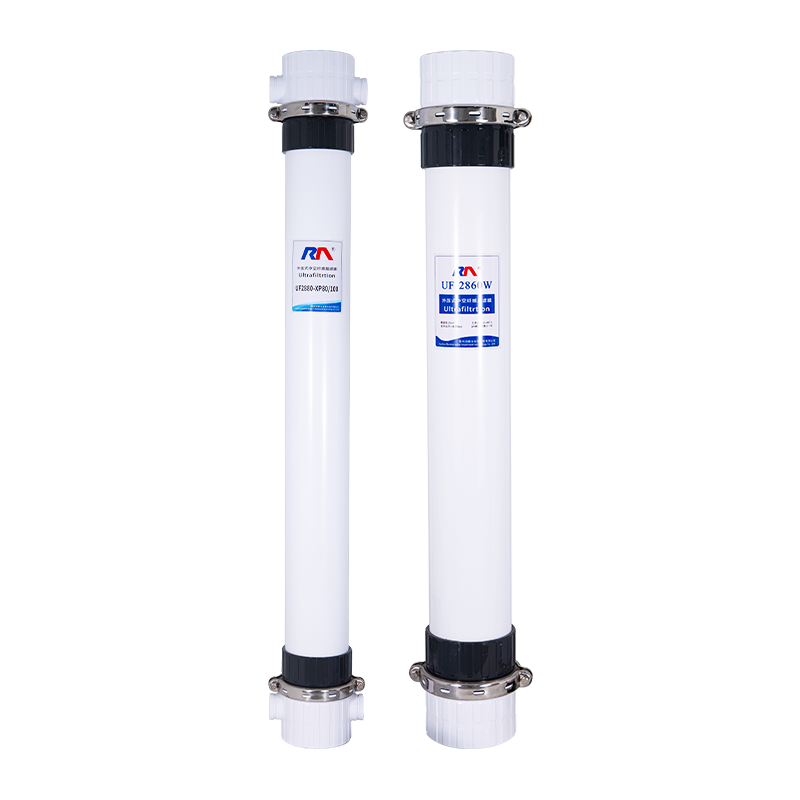
Fouling is the single greatest challenge in ultrafiltration membrane operation, occurring when particles, proteins, or salts accumulate on the membrane surface or within its pores. This leads to a decline in flux and an increase in transmembrane pressure (TMP). To maintain efficiency, operators must implement a combination of hydraulic and chemical cleaning strategies designed to disrupt the fouling layer without damaging the membrane integrity.
Ultrafiltration membranes are no longer viewed merely as a filtration step but as a tool for resource recovery. In the dairy industry, UF is used to concentrate milk proteins and recover whey, significantly increasing yield. In the automotive and metalworking sectors, ultrafiltration is utilized for the recovery of electrocoat paints from rinse water, saving thousands of dollars in raw material costs while simultaneously reducing hazardous waste volume.
Furthermore, as global water scarcity intensifies, UF serves as the primary pretreatment stage for seawater desalination and advanced wastewater reclamation. By providing a consistent, low-turbidity feed to downstream reverse osmosis units, ultrafiltration membranes extend the life of more sensitive equipment, reduce the frequency of membrane replacements, and ensure that reclaimed water meets stringent regulatory standards for non-potable and indirect potable reuse.