The brackish water desalination process is a critical technology for converting mildly salty water into fresh, usable water. This process is essential in regions with limited access to freshwater sources but abundant groundwater or surface water with a salinity level too high for direct consumption or agricultural use.
At the heart of this process lies reverse osmosis (RO), a pressure-driven membrane separation technique. Unlike seawater, which requires immense pressure to desalinate, brackish water (typically with a total dissolved solids or TDS content between 1,000 and 10,000 mg/L) needs less energy to push water through the Brackish Water Membranes.
The Multi-Stage Desalination Process
The desalination of brackish water is not a single step but a carefully engineered, multi-stage process to ensure efficiency and longevity of the system components, especially the membranes.
1. Pre-treatment
This is arguably the most crucial stage. The goal of pre-treatment is to protect the delicate Brackish Water Membranes from fouling, scaling, and chemical degradation. Common pre-treatment steps include:
-
Screening and filtration: Removing large particles, sand, and other suspended solids that could damage pumps and clog the system.
-
Chemical dosing: Adding chemicals like coagulants and flocculants to clump together fine particles, making them easier to filter out. Anti-scalants are also dosed to prevent mineral scale (like calcium carbonate) from forming on the membrane surface.
-
pH adjustment: The pH of the feed water is adjusted to optimize the performance of the membranes and prevent scaling.
-
Cartridge filtration: A final, fine-mesh filter captures any remaining particles before the water enters the high-pressure pumps.
2. High-Pressure Pumping
After pre-treatment, the water is pressurized by a high-pressure pump. This pressure is the driving force of the entire RO process. It must be sufficient to overcome the natural osmotic pressure of the brackish water, forcing pure water molecules through the semipermeable membrane. The typical operating pressure for brackish water RO systems ranges from 150 to 400 psi (10 to 28 bar), significantly lower than the 800 to 1,200 psi required for seawater desalination.
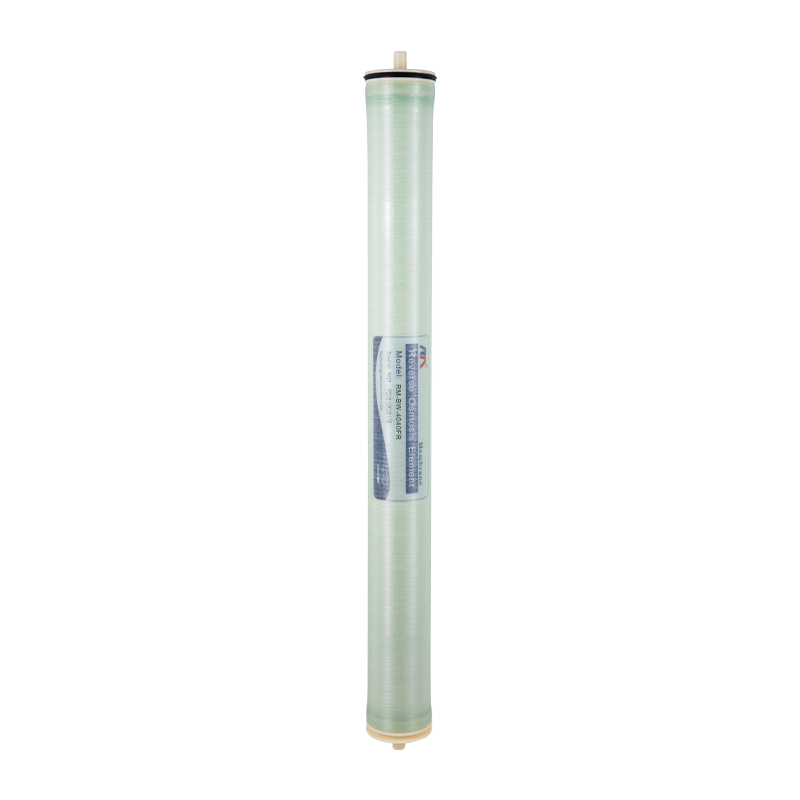
3. Reverse Osmosis (RO) with Brackish Water Membranes
The pressurized water is fed into pressure vessels containing Brackish Water Membranes. These membranes are thin, spiral-wound polyamide sheets with microscopic pores. They are designed to allow water molecules to pass through while effectively rejecting dissolved salts, minerals, bacteria, and viruses. The water that passes through the membrane is called permeate or fresh water, while the concentrated brine left behind is known as reject or concentrate.
The rejection rate of a quality Brackish Water Membrane is typically very high, often 98% or more, meaning only a very small fraction of the salt remains in the product water. The efficiency of this stage directly depends on the quality of the membrane and the effectiveness of the pre-treatment.
4. Post-treatment
The purified permeate from the RO process is now ready for use, but it may require some final adjustments. This can include:
-
pH stabilization: Re-adjusting the pH of the permeate to a neutral level for safe consumption.
-
Disinfection: Adding chlorine or using ultraviolet (UV) light to kill any remaining microorganisms and ensure the water is safe for drinking.
-
Remineralization: In some cases, minerals like calcium and magnesium are added back to improve the taste of the water.
The Role of Brackish Water Membranes
The selection of the right Brackish Water Membranes is paramount. These membranes are optimized for the specific challenges of brackish water: they must have a high salt rejection rate while maintaining a high flux (the rate of water flow through the membrane). Their robust design makes them resistant to chemical attack and physical fouling, but proper pre-treatment is the key to maximizing their lifespan, which can be several years.
In summary, the brackish water desalination process is a sophisticated solution that leverages advanced membrane technology to turn a marginal water source into a valuable resource. It's a testament to how engineering can address global water scarcity, providing a reliable and sustainable supply for communities and industries.



 English
 عربى
عربى