As global water resources become increasingly strained, Brackish Water Membranes technology has emerged as a crucial solution for addressing industrial water challenges. Brackish water, with a salinity level typically ranging from 0.5 to 30 grams per liter, is found in various sources such as estuaries, groundwater, and certain industrial wastewaters. Effectively treating this water not only helps alleviate freshwater scarcity but also provides a stable, high-quality water source for industrial production.
Core Principles of Brackish Water Membrane Technology
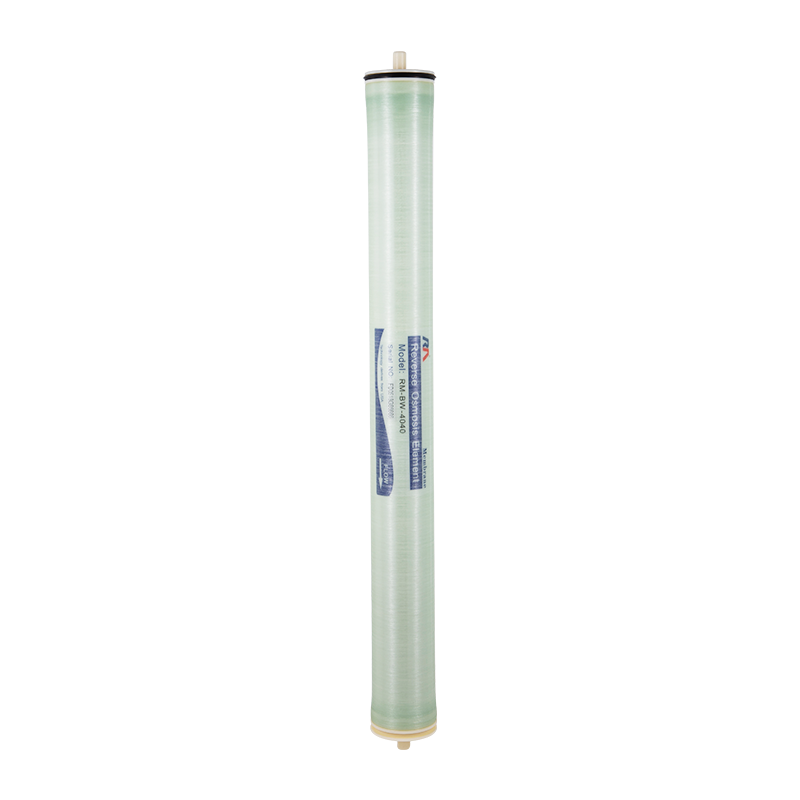
The core of Brackish Water Membranes technology is Reverse Osmosis (RO). This process uses a semipermeable membrane and applies pressure greater than the osmotic pressure of the solution to force water molecules through the membrane, leaving behind dissolved salts, organic matter, bacteria, and viruses. Compared to treating high-salinity seawater, treating brackish water requires lower pressure, which results in less energy consumption and more cost-effective operation. Modern brackish water membranes, often made from polyamide composite materials, feature high salt rejection and water flux, effectively removing over 95% of Total Dissolved Solids (TDS).
Key Industrial Application Scenarios
1. Semiconductor and Electronics Manufacturing
The semiconductor and electronics industries require ultra-pure water. Even minute impurities can cause product defects. Brackish Water Membranes serve as a critical pre-treatment step in the ultra-pure water production process, effectively removing most ions and particulates. This significantly reduces the load on subsequent ultra-purification units like ion exchange resins and UV disinfection, lowering operational costs and extending equipment life.
2. Power Generation
Thermal and nuclear power plants require large quantities of deionized water for their boilers. High-purity boiler feedwater prevents scaling and corrosion, improves thermal efficiency, and ensures safe operation. Using Brackish Water Membranes to treat cooling tower blowdown or brackish groundwater can produce high-quality boiler makeup water, reducing reliance on municipal freshwater and promoting water recycling.
3. Oil and Gas Industry
Oil and gas exploration and production generate vast amounts of wastewater, such as produced water and frac flowback, which contain high concentrations of salts, suspended solids, and organic compounds. Brackish Water Membranes can be used to treat and reuse this wastewater, converting it into a suitable source for boilers, cooling systems, or re-injection into wells. This not only helps reduce environmental pollution but also lowers water treatment and acquisition costs, especially in water-scarce regions.
4. Food and Beverage Industry
The food and beverage industry has stringent water quality requirements, often needing soft or pure water to ensure product quality and equipment hygiene. Using Brackish Water Membranes to treat source water effectively removes calcium, magnesium ions, microorganisms, and odors, providing a stable, clean process water supply and for equipment cleaning and disinfection.
5. Textile and Dyeing Industry
Wastewater from textile dyeing is typically high in dyes, salts, and chemical auxiliaries. Using Brackish Water Membranes for deep purification of pre-treated dyeing wastewater not only allows for the recovery of water for rinsing and dilution but also concentrates pollutants for easier centralized treatment. This reduces pollutant discharge and enables a closed-loop production system.
Future Trends and Challenges
While Brackish Water Membranes technology is widely applied, it still faces challenges. For instance, membrane fouling, where pollutants deposit on the membrane surface and reduce flux, is a major obstacle to the long-term stable operation of membrane systems. Future research will focus on developing new membrane materials with enhanced anti-fouling properties and optimizing pre-treatment processes to improve system stability and cost-effectiveness.
Furthermore, with the development of industrial digitalization, integrating Brackish Water Membranes systems with the Internet of Things (IoT), big data, and artificial intelligence will enable real-time monitoring, intelligent diagnostics, and automated optimization. This will further enhance their value in the industrial water treatment sector. In short, Brackish Water Membranes technology, with its high efficiency, energy savings, and environmental benefits, is becoming a key driver of sustainable industrial development.



 English
 عربى
عربى