In the vast and complex world of water purification and industrial separation, some of the most critical players operate behind the scenes. The PVDF UF Membrane is one such unsung hero, a product of advanced materials science that has quietly revolutionized how we treat water, process food, and manufacture pharmaceuticals. Far from being just a simple filter, this membrane is a sophisticated tool, designed with a unique set of properties that make it a champion in demanding environments. This exploration will peel back the layers to reveal what makes the PVDF UF Membrane a cornerstone of modern filtration technology.
The story of this membrane begins with its primary material: Polyvinylidene Fluoride, or PVDF. This polymer isn't just a random choice; it's a strategic selection based on its remarkable resistance and resilience. Unlike many other materials, PVDF can withstand a barrage of aggressive chemicals, from strong acids to corrosive solvents, without losing its structural integrity. This chemical fortitude is a game-changer, allowing the PVDF UF Membrane to excel in harsh industrial settings where other membranes would quickly fail.
But its strength doesn't stop there. The membrane is also a workhorse in high-temperature applications. Its thermal stability means it can handle hot water or steam for sanitation, a non-negotiable requirement in industries like food and beverage production. Furthermore, the inherent mechanical strength of PVDF ensures the membrane can endure high pressures without tearing or deforming, extending its lifespan and reducing maintenance costs.
The true magic, however, lies in how the membrane is engineered to counter a common problem: fouling. While PVDF is naturally water-repellent (hydrophobic), manufacturers have developed advanced techniques to modify the surface of the PVDF UF Membrane to make it water-loving (hydrophilic). This modification is crucial. A hydrophilic surface makes it much harder for organic materials, colloids, and other contaminants to stick to the membrane, leading to higher and more consistent flow rates of purified water. Less fouling means less frequent cleaning, which translates directly to more uptime and greater operational efficiency.
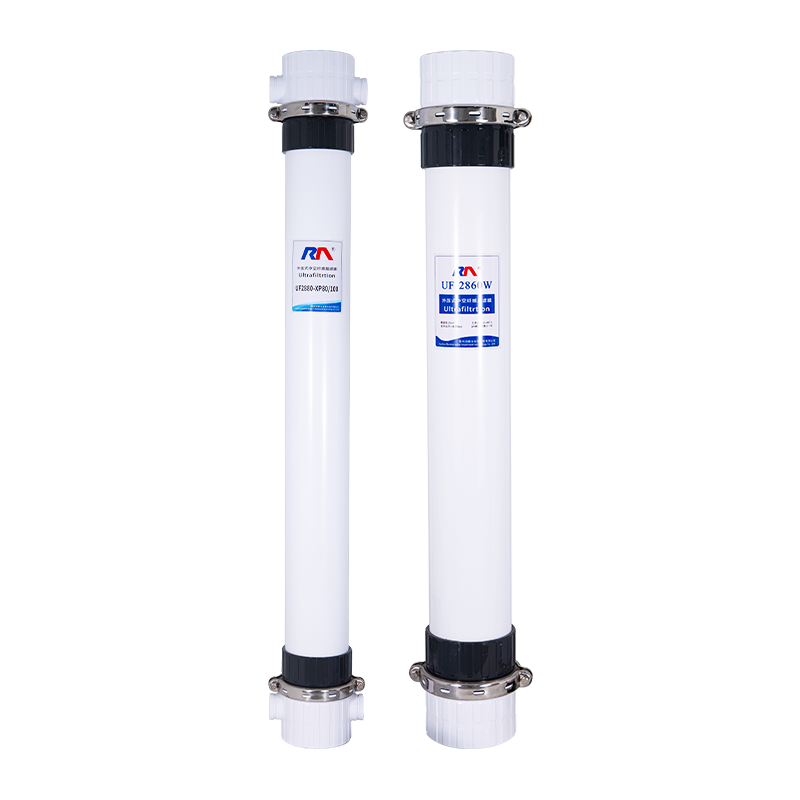
The ultrafiltration (UF) process itself is the perfect complement to these material properties. By using a precisely engineered pore size, typically between 0.01 and 0.1 microns, the PVDF UF Membrane acts as an impassable barrier to a wide range of unwanted particles. It effectively screens out bacteria, viruses, suspended solids, and large molecules like proteins, while allowing water and dissolved minerals to pass through freely. This selective separation is what makes it a vital component in creating safe drinking water, clarifying beverages, and purifying process streams.
The applications of this technology are as diverse as they are critical. In municipal water treatment, the PVDF UF Membrane provides a robust line of defense against pathogens. In wastewater treatment, it's a key player in recycling and reusing valuable water resources. In the food industry, it is used for everything from concentrating milk proteins to clarifying fruit juices. The biotechnology and pharmaceutical sectors rely on it for sterile filtration and protein separation, where the highest levels of purity and reliability are non-negotiable.
Ultimately, the power of the PVDF UF Membrane is not just in its performance, but in the ripple effect of its benefits. Its long-term durability and resistance to fouling lead to lower energy consumption, less chemical use for cleaning, and a lower total cost of ownership. It is an investment in reliability and efficiency, enabling industries to meet stringent quality standards while also advancing their sustainability goals. The PVDF UF Membrane is more than just a component; it is a foundational technology driving a cleaner and more efficient future.



 English
 عربى
عربى