Understanding Your Application: The First Step
Before you even start looking at specific membrane products, you need a deep understanding of your application. The success of a membrane process hinges on the synergy between the membrane and the feed stream.
-
What are you separating? Are you trying to remove particles, dissolved salts, organic molecules, or specific ions? The size and nature of the target contaminant dictate the required pore size or separation mechanism of the membrane.
-
What is the composition of the feed stream? The pH, temperature, and chemical composition of the fluid are crucial. Harsh conditions can degrade some membrane materials, so you need a membrane that is chemically and thermally stable.
-
What are your performance goals? Are you aiming for high purity of the permeate (the filtered fluid) or high recovery of the concentrate (the retained fluid)? Do you need a high flux (the flow rate through the membrane)? Your goals will inform the type of membrane technology you need.
Key Characteristics of an Industrial Membrane
The heart of the matter lies in the properties of the membrane itself. These characteristics define its performance and suitability for a given application.
1. Membrane Material
The material is the foundation of the Industrial Membrane and determines its chemical and thermal resistance, as well as its mechanical strength.
-
Polymeric Membranes: These are the most common type due to their versatility and lower cost. Materials like polysulfone (PS), polyethersulfone (PES), polyvinylidene fluoride (PVDF), and cellulose acetate are widely used. They are effective for a broad range of applications from water purification to food and beverage processing.
-
Ceramic Membranes: Made from materials like alumina, zirconia, or silicon carbide, these membranes are exceptionally durable. They can withstand high temperatures, extreme pH, and harsh chemicals, making them ideal for challenging industrial applications and waste stream treatment where polymeric membranes would fail.
-
Inorganic Membranes: This category includes ceramic membranes but also others like metallic membranes. They are known for their robustness and long lifespan.
2. Membrane Configuration
The physical structure of the membrane module impacts its packing density (the membrane area per unit volume), ease of cleaning, and resistance to fouling.
-
Hollow Fiber Membranes: These consist of thousands of tiny, straw-like fibers bundled together. They offer a very high packing density and are excellent for applications where a large surface area is needed in a compact footprint. They are commonly used in water and wastewater treatment.
-
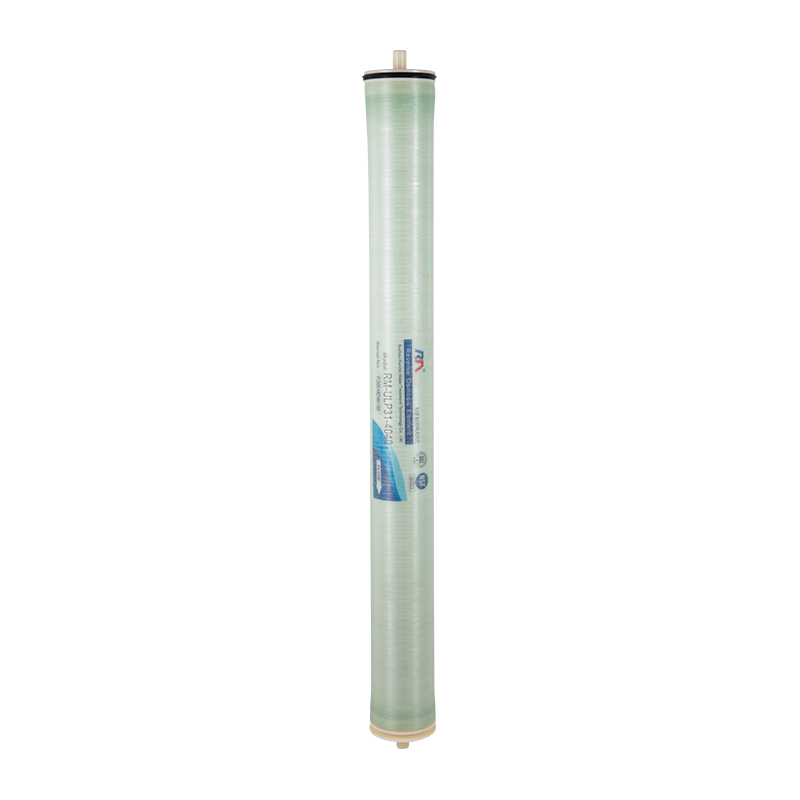
Spiral-Wound Membranes: The most common configuration for reverse osmosis (RO) and nanofiltration (NF). They are constructed from flat sheets of membrane and spacer material rolled around a central permeate tube. They are highly efficient and are the industry standard for desalination and high-purity water production.
-
Plate-and-Frame Membranes: This design consists of flat membrane sheets separated by support plates. While they have a lower packing density, they are easy to access for cleaning and are often used in biotechnology and pharmaceutical applications where sanitation and ease of maintenance are critical.
-
Tubular Membranes: These are large-diameter tubes with the membrane on the inside. They are highly resistant to fouling and are excellent for treating fluids with high solid content or viscosity.
3. Separation Mechanism and Pore Size
This is perhaps the most critical factor. It determines what the membrane will let through and what it will reject.
-
Reverse Osmosis (RO): This is a pressure-driven process that uses a very dense membrane to separate dissolved salts and small organic molecules from water. RO membranes have no physical pores in the traditional sense and are used for desalination and producing ultra-pure water.
-
Nanofiltration (NF): Also known as a "softening membrane," NF membranes are slightly more porous than RO and can separate divalent ions (like calcium and magnesium) while letting monovalent ions (like sodium and chloride) pass through. They are used for water softening and removing specific contaminants.
-
Ultrafiltration (UF): UF membranes have a pore size range of 0.01 to 0.1 microns. They are effective at separating larger molecules, viruses, and colloids from a solution. UF is widely used in food and beverage processing, wastewater treatment, and pre-treatment for RO systems.
-
Microfiltration (MF): With pore sizes from 0.1 to 10 microns, MF membranes are used for removing suspended solids, bacteria, and large particles. They act like a very fine sieve and are common in clarifying beverages and sterilizing fluids.
Evaluating Performance: Beyond the Product Sheet
Choosing the right Industrial Membrane isn't just about matching the numbers on a data sheet. You must also consider the following practical factors.
-
Fouling Resistance: All membranes will foul to some degree, meaning contaminants build up on their surface and reduce performance. However, some materials and configurations are more resistant to fouling than others. A membrane's ability to be effectively cleaned is a major factor in its long-term cost-effectiveness.
-
Cost of Ownership: Look beyond the initial purchase price. Factor in the energy consumption (especially for high-pressure systems like RO), the cost of chemicals for cleaning, and the expected lifespan of the membrane. A more expensive, but more durable, membrane can have a lower total cost of ownership over its lifetime.
-
Supplier and Technical Support: A reliable supplier can provide valuable application expertise, pilot testing services, and ongoing technical support. This can be crucial for troubleshooting and optimizing your process.
In conclusion, selecting the right Industrial Membrane is a strategic decision that requires a thorough understanding of your process, the membrane's core characteristics, and the practical implications of its long-term use. By focusing on the material, configuration, and separation mechanism, and by carefully evaluating performance and cost, you can choose a membrane that not only meets your immediate needs but also provides reliable and efficient performance for years to come.



 English
 عربى
عربى