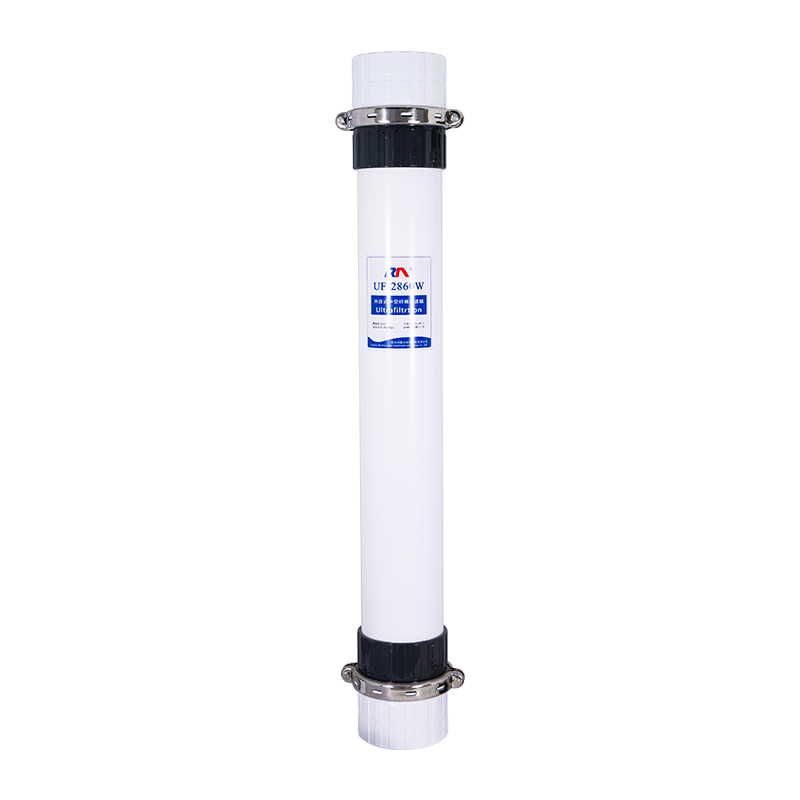
Ultrafiltration (UF) is a powerful, pressure-driven water treatment process that utilizes a physical barrier—the UF Membranes—to purify water. This technology is highly effective at removing a wide array of particulates and microorganisms based on their size, making it a reliable solution for producing high-quality water for drinking, industrial processes, and wastewater reuse.
The core of the ultrafiltration process lies in its semi-permeable membranes, which typically feature pore sizes ranging from 0.01 to 0.1 microns (or 0.001 to 0.1 micrometers). This fine pore size is the key to UF’s ability to exclude contaminants while allowing water and smaller dissolved particles to pass through.
Primary Contaminants Removed by UF
Ultrafiltration excels at eliminating suspended and high-molecular-weight substances, providing a consistently high-quality effluent. The primary contaminants effectively removed by UF membranes include:
1. Pathogens (Microbiological Contaminants)
UF systems offer a superior physical barrier for microbiological safety, often achieving near-complete removal of:
- Bacteria: Virtually all types of bacteria, including common harmful ones like E. coli and Salmonella.
- Protozoa/Cysts: Parasitic cysts such as Giardia and Cryptosporidium, which are highly resistant to chemical disinfectants like chlorine.
- Viruses: The extremely small pore size of the membranes makes UF highly effective at removing viruses, offering a significant advantage over traditional microfiltration.
2. Suspended Solids and Particulates
Ultrafiltration is an excellent solution for clarifying water by removing particles that contribute to cloudiness (turbidity) and high Silt Density Index (SDI). These include:
- Silt and Clay
- Sediments and Rust
- Colloidal Matter: Extremely small, non-settleable particles that are challenging for conventional filters.
- Algae
3. Macromolecules and Organic Matter
UF membranes are defined by their Molecular Weight Cut-Off (MWCO), which determines the size of high molecular weight (HMW) organic molecules they retain. This capability makes UF invaluable in industries like food and beverage and pharmaceuticals for specific separation tasks.
- Proteins and Enzymes (critical in dairy and juice processing)
- Endotoxins and Pyrogens (critical in pharmaceutical and healthcare applications)
- High Molecular Weight Natural Organic Matter (NOM): Including compounds like Humic and Fulvic acids, which can affect water taste, color, and odor, and foul downstream equipment like Reverse Osmosis (RO) membranes.
What Ultrafiltration Does NOT Remove
It is equally important to understand the limitations of UF membranes. Ultrafiltration is a size-exclusion process and is not designed to remove dissolved contaminants that are smaller than the membrane pores.
- Dissolved Salts and Minerals (TDS): UF retains beneficial minerals like calcium and magnesium, which is often desirable, but it does not reduce Total Dissolved Solids (TDS) like table salt. Reverse Osmosis (RO) is the appropriate technology for significant salt removal.
- Ionic Contaminants: Individual ions, such as fluoride, arsenic, heavy metals (in ionic form), and nitrates, will generally pass through the membrane.
- Small, Low Molecular Weight Organics: Small synthetic chemicals, pesticides, and many volatile organic compounds (VOCs) are often small enough to pass through.
For removal of these smaller, dissolved contaminants, ultrafiltration is typically used as a pre-treatment step before other processes like Activated Carbon filtration (for taste, odor, and small organic molecules) or Reverse Osmosis (for salts and ions). By efficiently removing suspended solids and macromolecules, UF significantly protects and prolongs the life of these final polishing technologies.



 English
 عربى
عربى