English
 عربى
عربى
News
Home / News / Industry News / What are the Advantages and Disadvantages of SW Membranes Compared to Other Membrane Types?
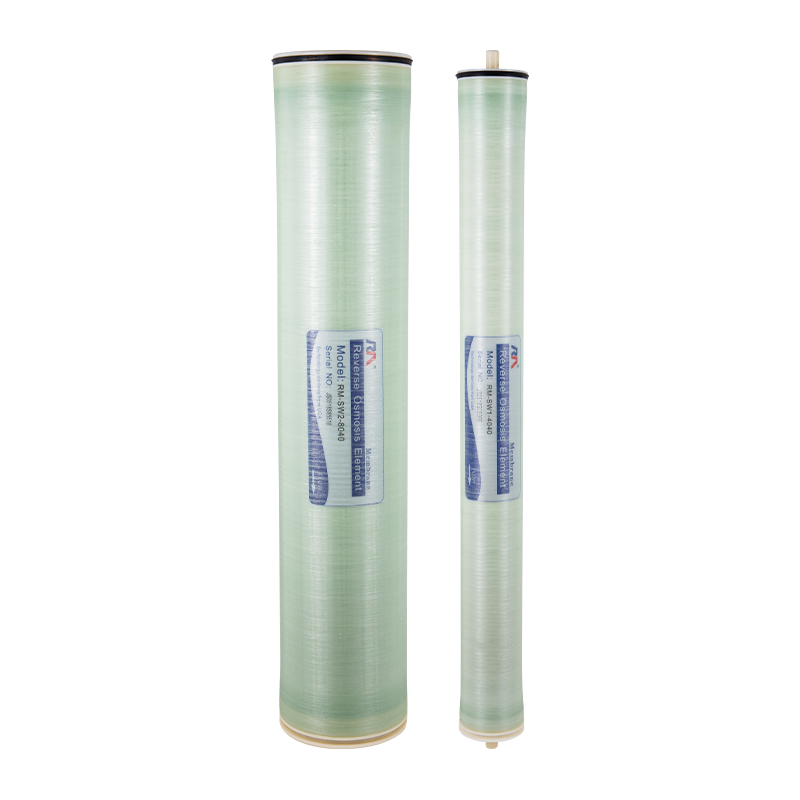
SW Membranes (Seawater Reverse Osmosis Membranes) are highly specialized filtration products designed for the demanding process of seawater desalination. They represent the apex of membrane separation technology, offering the highest level of filtration precision among pressure-driven membrane processes (Microfiltration, Ultrafiltration, Nanofiltration, and Reverse Osmosis). Their core function is to effectively separate water molecules from highly concentrated salts and other dissolved solids found in seawater.
The primary advantages of SW membranes stem from their exceptionally fine separation capabilities and specialized construction for high-salinity, high-pressure environments.
The most significant advantage of SW Membranes is their pore size, which is effectively non-porous (less than ). This allows them to achieve an excellent rejection rate, typically 99.7% or higher, for total dissolved solids (TDS), including the high concentration of monovalent ions (like sodium and chloride) present in seawater.
Compared to Nanofiltration (NF) membranes, which reject of dissolved salts and allow some monovalent ions to pass through, SW membranes ensure a much higher purity, essential for producing potable water from the ocean.
Compared to Ultrafiltration (UF) and Microfiltration (MF) membranes, which primarily remove suspended solids, bacteria, and viruses but do not remove dissolved salts, SW membranes are the only viable pressure-driven option for desalination.
SW membranes are constructed to withstand the specific rigors of seawater desalination.
They are designed for operation at very high applied pressures (typically or and above) required to overcome the naturally high osmotic pressure of seawater. This is substantially higher than the pressures for brackish water RO, NF, UF, or MF membranes.
Advanced Thin-Film Composite (TFC) chemistry provides the required chemical and physical resistance to maintain performance despite the high salt concentration and operational stress.
The high salt rejection and robust performance mean that SW membranes are the definitive technology for converting vast, otherwise unusable seawater resources into clean, potable, and industrial-grade water, which is a key necessity for water-scarce regions.
While offering superior separation, the specialized nature of SW membranes introduces certain drawbacks compared to other membrane types.
The necessity of overcoming the significant natural osmotic pressure of seawater translates directly into a high energy requirement.
The system requires high-pressure pumps and associated energy recovery devices, resulting in a significantly higher Operating Expenditure (OPEX) compared to low-pressure processes like NF, UF, or MF, which operate at much lower transmembrane pressures (e.g., UF is typically compared to for SWRO).
Due to their extremely tight structure and high-pressure operation, SW Membranes are highly sensitive to fouling and scaling from suspended solids, particulates, and biological matter in the feed water.
Compared to UF or MF membranes, which are often used as pre-treatment themselves and can handle higher levels of solids, SW membranes require an intensive, multi-stage pre-treatment process (often including coagulation, flocculation, filtration, and potentially a membrane process like UF/MF) to protect the RO elements.
Failure to pre-treat adequately results in rapid fouling, which lowers efficiency and dramatically shortens the lifespan of the costly RO membrane elements, necessitating frequent and expensive chemical cleaning.
The overall system complexity and the nature of the components drive up both initial investment and running costs.
The need for specialized high-pressure equipment (pumps, vessels, piping) and sophisticated pre-treatment adds to the Capital Expenditure (CAPEX).
The membranes themselves are made of highly engineered TFC material, making them more expensive to replace than UF or MF membranes. The necessary routine maintenance, chemical cleaning, and periodic replacement also contribute to higher long-term costs.
RO systems inherently produce a concentrated reject stream (brine).
Compared to processes like NF for water softening, which might have higher recovery for certain feed waters, SW Membranes typically have a lower water recovery rate (often in single-pass seawater systems) due to the high salt concentration. This means a significant volume of feed water is discharged as a highly concentrated brine, which presents an environmental challenge for disposal.