Choosing the right membrane for a water treatment system is a critical decision that directly impacts efficiency, cost, and water quality. When it comes to reverse osmosis (RO) membranes, a common point of comparison is between ULP, LP, and BWRO membranes. While they all perform the same basic function—removing dissolved solids from water—they are designed for different applications and operate under unique conditions.
What Do These Acronyms Mean?
Before diving into the differences, let's clarify the terminology:
-
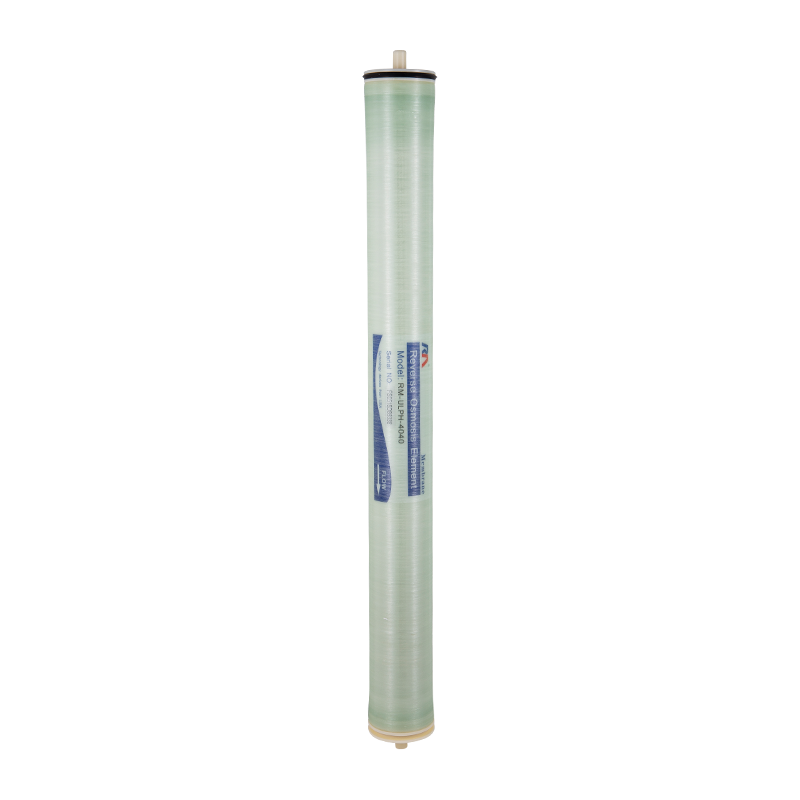
ULP: Ultra-Low Pressure. This type of membrane, also known as an ULP membrane, is designed to operate at significantly lower pressures than traditional RO membranes. This low-pressure operation is its key feature and primary advantage.
-
LP: Low Pressure. These membranes operate at pressures somewhere between ULP and standard BWRO membranes. They were an evolution in the industry to reduce the energy consumption of traditional RO systems.
-
BWRO: Brackish Water Reverse Osmosis. This is the industry standard for treating brackish water, which is water with a higher concentration of dissolved salts than freshwater but less than seawater. BWRO membranes operate at higher pressures to achieve high salt rejection rates.
Key Differences: Pressure, Energy, and Performance
The most significant distinction between these membranes lies in their operational pressure, which directly influences energy consumption and performance.
Operational Pressure and Energy Consumption
-
ULP Membrane: An ULP membrane typically operates at pressures as low as 70-150 psi (4.8-10.3 bar). This is dramatically lower than the other two types. The result? A substantial reduction in energy costs. For many industrial and commercial applications, this energy savings is the single most compelling reason to choose an ULP membrane.
-
LP Membrane: These membranes operate in a middle range, generally from 150-250 psi (10.3-17.2 bar). While they offer better energy efficiency than BWRO membranes, they don't achieve the ultra-low energy consumption of their ULP counterparts.
-
BWRO Membrane: These are the workhorses for brackish water, requiring high pressures, often in the range of 200-400 psi (13.8-27.6 bar) or even higher, to effectively reject salts. This higher pressure translates to greater energy consumption.
Salt Rejection and Feed Water Quality
This is where the trade-off becomes clear. A membrane's ability to reject salts is directly related to the pressure applied and its specific design.
-
ULP Membrane: An ULP membrane is best suited for treating sources with a very low TDS (Total Dissolved Solids) count, typically less than 1,000 ppm. Because they operate at such low pressures, their salt rejection rate is generally lower than LP or BWRO membranes. While they are highly effective for municipal water or well water with low salinity, they are not suitable for high-salinity brackish water.
-
LP Membrane: LP membranes offer a good balance. They can handle a wider range of feed water TDS (e.g., up to 2,000 ppm) with a higher salt rejection rate than ULP membranes, all while still providing better energy efficiency than BWRO.
-
BWRO Membrane: These membranes are built for high TDS feed water, often up to 5,000 ppm or more. Their high-pressure operation allows them to achieve superior salt rejection, typically 99% or higher, making them the standard choice for most brackish water applications.
Fouling Resistance
Membrane fouling is a major challenge in all RO systems.
-
ULP Membrane: Due to their low operational pressure, ULP membrane systems are often less prone to physical compaction and can be easier to clean. However, they are still susceptible to biological and organic fouling, so proper pre-treatment is always essential.
-
LP & BWRO Membranes: The higher pressures in these systems can sometimes lead to more severe compaction and a higher risk of irreversible fouling if not managed correctly.
Choosing the Right Membrane
The choice between a ULP membrane, an LP membrane, or a BWRO membrane is not about which one is "best" but rather which one is the most suitable for the specific application.
-
Choose an ULP membrane when: Your feed water has a very low TDS count (e.g., less than 1,000 ppm), and energy efficiency is your top priority. This is common for treating municipal tap water or low-salinity well water for industrial processes.
-
Choose an LP membrane when: You need a balance of good salt rejection and reduced energy consumption for a feed water source with moderate TDS.
-
Choose a BWRO membrane when: You are treating high-salinity brackish water and need the highest possible salt rejection rate to meet purity requirements.
In summary, the evolution from BWRO to LP and finally to the ULP membrane has provided system designers with more specialized tools. By carefully analyzing the feed water quality and balancing the need for high-purity water with energy efficiency, engineers can design a more cost-effective and sustainable water treatment system.



 English
 عربى
عربى