Water scarcity is a global challenge, and seawater membranes have become a critical technology for producing fresh, potable water through desalination. These membranes act as a sophisticated filter, allowing water molecules to pass through while rejecting salts, minerals, and other contaminants. The choice of membrane is crucial for the efficiency and cost-effectiveness of a desalination plant, and they are broadly classified by their pore size and the type of filtration they perform.
Understanding the Key Membrane Types
While several types of membranes exist for water treatment, the primary ones used for seawater desalination are Reverse Osmosis (RO) and Nanofiltration (NF). Other membrane types, like Ultrafiltration (UF) and Microfiltration (MF), are typically used as a pretreatment step to protect the more delicate RO and NF membranes.
1. Reverse Osmosis (RO) Membranes
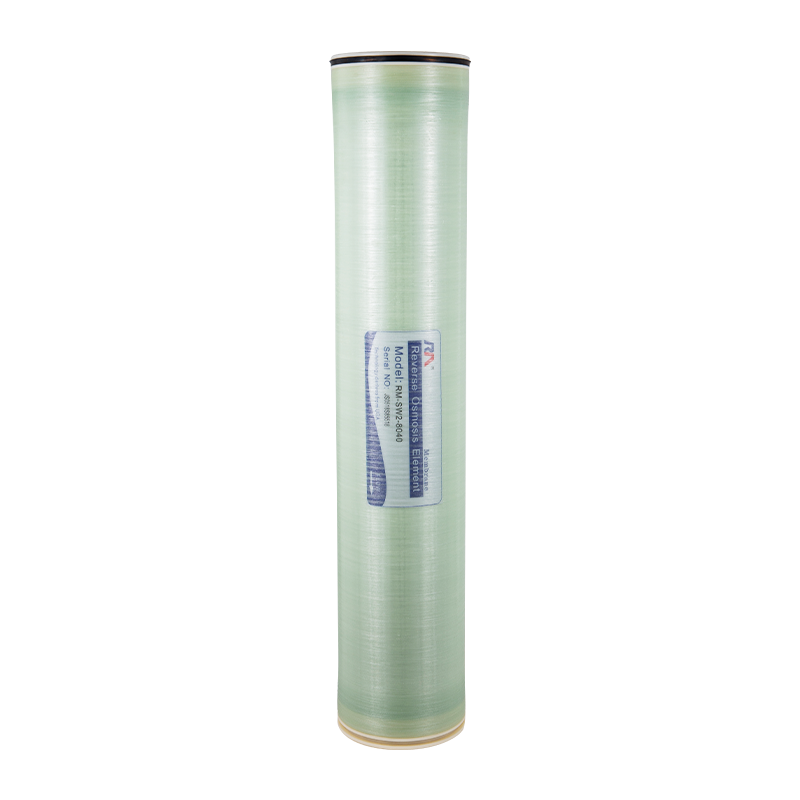
Reverse Osmosis is the gold standard for seawater desalination. It's a pressure-driven process that forces water through a semipermeable membrane, leaving dissolved salts and other impurities behind. RO membranes have an extremely dense, non-porous structure.
-
Pore Size: RO membranes have the smallest pore size, effectively acting as a barrier to anything larger than a water molecule. This allows them to reject not only suspended solids but also dissolved salts and monovalent ions like sodium and chloride.
-
Material: Modern RO membranes are typically thin-film composites (TFC) made of a polyamide active layer on a porous polysulfone support. This multi-layered structure provides both high performance and mechanical strength.
-
Application: RO is used for high-salinity applications, including both seawater and high-TDS (total dissolved solids) industrial wastewater. They are the most common type of seawater membranes in large-scale desalination plants.
-
Energy Requirement: Due to the extremely small pore size and the need to overcome osmotic pressure, RO requires significant energy, making it an energy-intensive process.
2. Nanofiltration (NF) Membranes
Nanofiltration is often referred to as "loose" RO because it operates similarly but with a slightly larger pore size. NF membranes are particularly effective at rejecting divalent ions and larger molecules.
-
Pore Size: NF membranes have a larger pore size than RO, allowing some smaller monovalent ions (like sodium and chloride) to pass through. However, they are highly effective at rejecting larger multivalent ions (like magnesium and calcium sulfate).
-
Application: While not typically used for full seawater desalination, NF membranes are valuable for treating brackish water and for specific industrial applications where selective removal of multivalent ions is required. They can also be used as a pretreatment step for RO to reduce scaling and fouling.
-
Energy Requirement: Because NF membranes have a larger pore size, they require less pressure and, therefore, consume less energy than RO membranes.
3. Pretreatment Membranes: UF and MF
Before the primary desalination step, seawater must be pretreated to remove larger particles that could damage or foul the RO membranes. This is where Ultrafiltration (UF) and Microfiltration (MF) come in.
-
Microfiltration (MF): MF membranes have the largest pore size of all membrane types, used to remove suspended solids, colloids, and large bacteria.
-
Ultrafiltration (UF): UF membranes have a smaller pore size than MF, capable of removing smaller particles, bacteria, viruses, and large organic molecules.
-
Synergy: In modern desalination plants, UF is often used as a direct pretreatment for RO. This combination ensures that the RO seawater membranes are protected from particulate fouling, extending their lifespan and maintaining high performance.
Membrane Configurations
Beyond the type of filtration, membranes are also manufactured in different physical configurations to optimize performance and reduce footprint.
-
Spiral-Wound: This is the most common configuration for RO and NF membranes. The membrane sheets are rolled around a central tube, providing a large surface area in a compact design.
-
Hollow Fiber: In this configuration, membranes are in the form of fine, hollow tubes. Water is fed either through the center of the fibers or around the outside, making it a very effective design for high-turbidity water. UF and MF membranes are commonly found in this configuration.
Understanding the different types of seawater membranes is crucial for designing and operating efficient desalination systems. The choice depends on the source water quality, the desired product water, and economic considerations. As technology advances, new membrane materials and designs continue to improve the energy efficiency and reliability of desalination, making it an increasingly viable solution for global water needs.



 English
 عربى
عربى