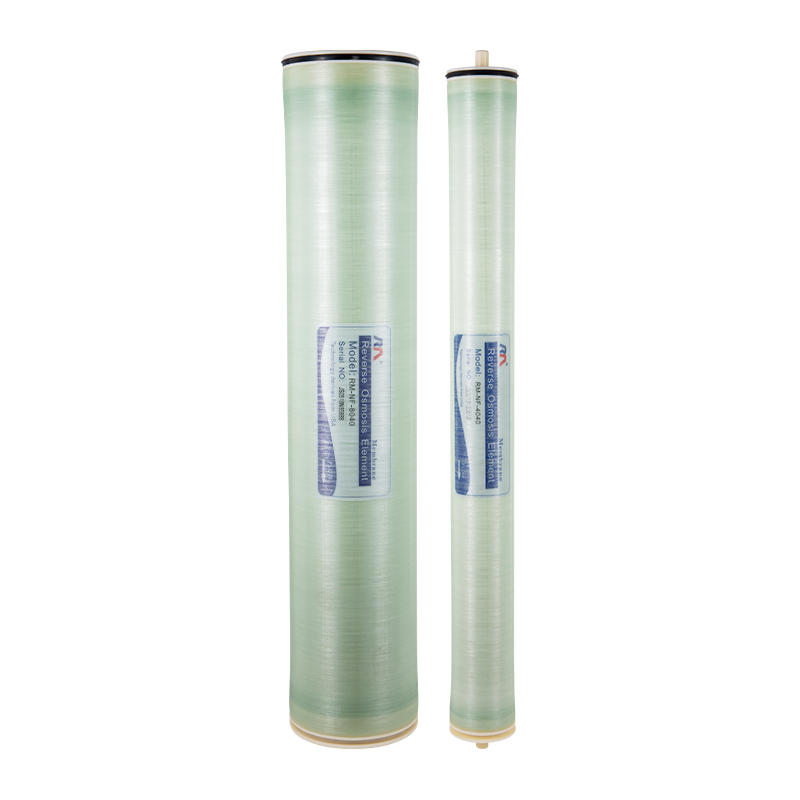
NF membranes, or Nanofiltration membranes, have emerged as a crucial technology in a wide range of industrial and environmental applications. Positioned between reverse osmosis (RO) and ultrafiltration (UF), NF membranes offer a unique balance of separation capabilities, allowing them to selectively remove multivalent ions, small organic molecules, and certain dissolved salts while retaining monovalent ions and water. This selectivity makes them highly valuable for specific separation, purification, and concentration processes.
Water and Wastewater Treatment
One of the most significant applications of NF membranes is in water and wastewater treatment. They are widely used for:
-
Softening Hard Water: NF membranes are highly effective at removing divalent ions like calcium (Ca2+) and magnesium (Mg2+) that cause water hardness. This is a more energy-efficient alternative to conventional ion exchange methods for municipal and industrial water softening.
-
Desalination of Brackish Water: While RO is the primary choice for seawater desalination, NF membranes are a cost-effective solution for treating brackish water with lower salt concentrations. They can remove specific ions and other contaminants, making the water suitable for drinking or industrial use.
-
Removal of Micropollutants: As concerns about emerging contaminants grow, NF membranes are being utilized to remove pharmaceuticals, pesticides, and endocrine-disrupting compounds from drinking water sources. Their pore size allows them to effectively block these small, complex molecules.
-
Wastewater Reuse and Reclamation: NF membranes can be used as a final polishing step in wastewater treatment plants to remove residual dissolved solids and organic matter, enabling the reuse of water for non-potable applications like irrigation or industrial processes.
Food and Beverage Industry
In the food and beverage sector, NF membranes are used to improve product quality and efficiency. Their ability to separate specific components without using heat makes them ideal for sensitive products.
-
Dairy Processing: NF membranes are used for concentrating milk and whey, demineralizing whey, and fractionating milk to produce high-value ingredients. They can separate lactose from minerals and proteins, which is essential for producing products like lactose-free milk and enriched protein powders.
-
Juice and Beverage Production: NF membranes are employed for clarifying fruit juices, removing bitter compounds, and concentrating flavors. This process enhances the flavor profile and shelf-life of products without the need for thermal processing, which can degrade vitamins and other nutrients.
-
Sugar and Sweetener Production: In the production of sugar syrups and alternative sweeteners, NF membranes can be used for the purification and concentration of sugar streams, improving the final product's purity and reducing energy costs associated with evaporation.
Chemical and Pharmaceutical Industries
The high selectivity of NF membranes makes them a powerful tool for separation and purification in the chemical and pharmaceutical fields.
-
Separation of Dyes and Pigments: NF membranes are used to separate and concentrate dyes from industrial wastewater streams. This not only allows for the recovery of valuable products but also reduces the environmental impact of textile and chemical industries.
-
Antibiotic and API Production: In the synthesis of active pharmaceutical ingredients (APIs), NF membranes can be used to separate a product from unreacted starting materials or to remove salts from a solution. This provides a more efficient and less energy-intensive alternative to traditional crystallization or solvent-based separation methods.
-
Catalyst Recovery: NF membranes can be used to recover homogeneous catalysts from reaction mixtures, allowing for their reuse and significantly lowering production costs and waste.
Textile Industry
The textile industry uses large volumes of water and produces significant amounts of colored wastewater. NF membranes are instrumental in addressing this environmental challenge.
In summary, the diverse applications of NF membranes are a testament to their versatility and efficiency. As industries strive for greater sustainability and operational efficiency, these membranes will continue to play a pivotal role in creating cleaner processes and a more sustainable future.



 English
 عربى
عربى