English
 عربى
عربى
News
Home / News / Industry News / Seawater RO Membranes Explained: What Buyers Need to Know Before Choosing One
Content
Seawater RO membranes are specialized filtration elements used in reverse osmosis systems to remove salt and dissolved minerals from seawater, producing fresh water suitable for drinking, irrigation, or industrial use. Unlike brackish water RO membranes, which are designed to handle lower salinity feedwater, a seawater reverse osmosis membrane is built to withstand much higher pressure and salt concentration, since seawater typically contains around 35,000 ppm of total dissolved solids compared to a few thousand ppm in brackish sources. This difference in operating conditions means seawater membranes use tighter pore structures and reinforced membrane materials capable of operating at significantly higher feed pressures, often in the range of 800 to 1,200 psi, to push water molecules through while rejecting dissolved salts. Choosing the wrong membrane type for a seawater application leads to poor salt rejection, reduced system lifespan, and ultimately water that doesn't meet quality targets.
Understanding the internal structure and filtration mechanism of an SWRO membrane element helps buyers evaluate spec sheets more accurately and recognize which technical details actually matter for their application.
Most commercial seawater RO membranes use a spiral-wound design, where thin sheets of semi-permeable membrane material are layered with feed spacers and wrapped around a central collection tube. This construction maximizes the available membrane surface area within a compact cylindrical housing, allowing more filtration capacity per element without requiring excessive physical space.
The thin-film composite layer at the heart of the membrane works by allowing water molecules to pass through while blocking dissolved salt ions based on size and charge exclusion. Salt rejection rates for quality seawater membranes typically fall between 99.4% and 99.8%, and even small differences in this percentage translate into meaningfully different permeate water quality, especially for applications requiring very low residual salinity.
Because seawater has such high osmotic pressure, the system needs to apply feed pressure well above that natural osmotic resistance to drive freshwater through the membrane. This high-pressure requirement is also why energy consumption is one of the largest ongoing operating costs in seawater desalination, making membrane efficiency directly tied to long-term system economics.
When comparing seawater desalination membranes from different manufacturers, buyers should look beyond the headline salt rejection number and review several specifications together to get an accurate picture of expected performance.
| Specification | Typical Range | Why It Matters |
| Salt Rejection Rate | 99.4%–99.8% | Determines final permeate water quality |
| Permeate Flow Rate | 6,000–11,000 GPD per element | Affects how many elements are needed for target capacity |
| Maximum Operating Pressure | 800–1,200 psi | Must match system pump and housing pressure rating |
| Standard Element Size | 4 inch or 8 inch diameter | Must match existing pressure vessel housings |
Even high-quality seawater RO membranes will underperform or fail prematurely if feedwater conditions and operating parameters aren't properly managed. Buyers should understand these risk factors before assuming poor membrane performance is always a product defect.
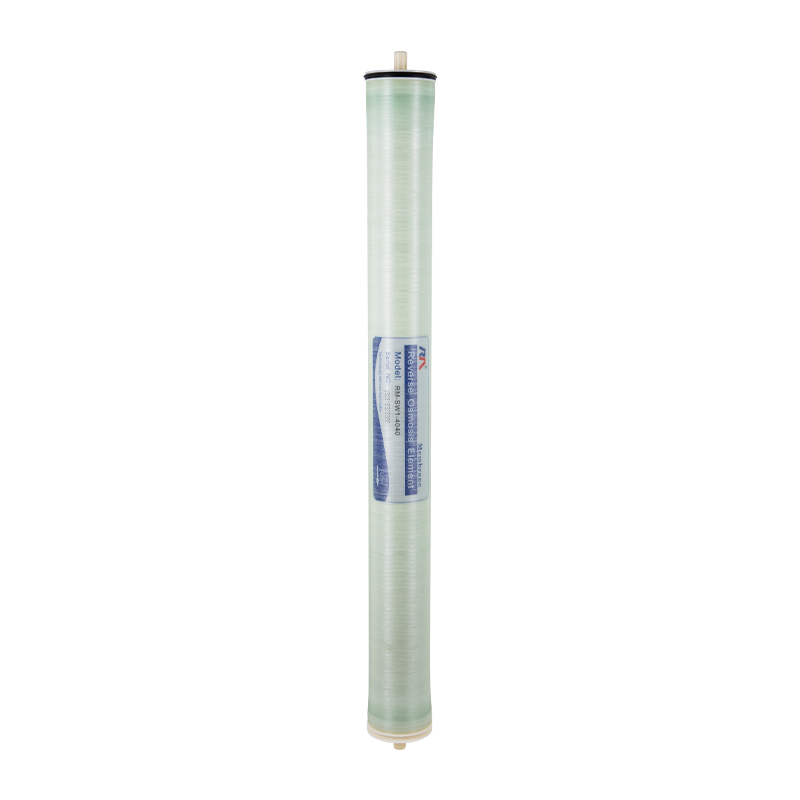
Selecting the right number and size of seawater reverse osmosis membrane elements depends on matching total system capacity, recovery rate targets, and feedwater salinity to the specific performance characteristics of the chosen membrane model. Systems designed with too few elements for the target output run at unnecessarily high pressure and stress, accelerating wear, while oversized systems increase upfront capital cost without proportional benefit. Working through this sizing calculation typically requires reviewing manufacturer projection software or consulting directly with the membrane supplier's technical team, since feedwater temperature, salinity, and seasonal variation all affect real-world output compared to standard test conditions.
Given the technical complexity and ongoing operating cost implications of membrane selection, it's worth requesting specific, verifiable information from suppliers rather than relying on general product claims.
Choosing the right seawater RO membranes comes down to matching salt rejection performance, pressure ratings, and capacity specifications to your specific feedwater conditions and system design, rather than selecting based on the lowest unit price alone. Buyers who carefully evaluate pretreatment requirements, confirm specification details against actual operating conditions, and ask suppliers for application-specific performance data tend to avoid the premature membrane failures and rising operating costs that come from mismatched equipment decisions. Since membrane performance directly determines both water quality output and long-term operating expenses, getting this selection right has lasting financial and operational impact on the entire desalination system.