The increasing global demand for fresh water, driven by population growth, industrialization, and climate change, has made seawater desalination a critical necessity. At the heart of this process lies the membrane technology, specifically SW Membranes (Seawater Membranes). These sophisticated semi-permeable barriers are the core components that make reverse osmosis (RO) a viable and energy-efficient method for turning the ocean’s vast reserves into potable water.
The Role and Function of SW Membranes
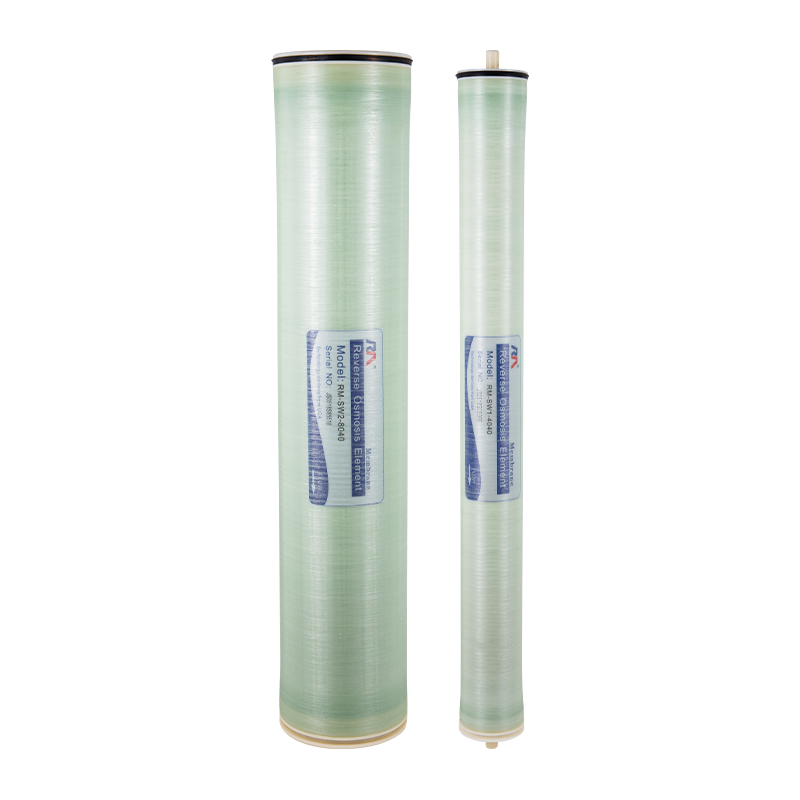
SW Membranes are primarily used in Seawater Reverse Osmosis (SWRO) plants. Their fundamental role is to act as a highly selective filter. When high pressure is applied to saline water on one side of the membrane, water molecules are forced through the microscopic pores, while the dissolved salts, minerals, and other contaminants are rejected and remain on the feed side. This process achieves a high rejection rate for $\text{NaCl}$ (sodium chloride), typically $99.5%$ or greater, while allowing purified water (permeate) to pass through.
The material of choice for the active layer of most high-performance SW Membranes is a polyamide thin-film composite (TFC). This structure consists of three layers:
- Polyamide Barrier Layer: An ultra-thin (often less than 200 nanometers) selective layer formed via interfacial polymerization. This layer dictates the salt rejection and water flux performance.
- Polysulfone Porous Support Layer: A thicker, highly porous layer that provides mechanical stability and support to the polyamide layer.
- Non-Woven Fabric: A robust substrate for overall mechanical integrity, often polyester.
Key Performance Metrics and Challenges
The performance of SW Membranes is evaluated primarily based on two factors:
- Salt Rejection: The percentage of dissolved salts prevented from passing through. Higher is better.
- Water Flux: The volume of water produced per unit area of the membrane per unit time (e.g., $\text{L}/\text{m}^2\text{hr}$ or GFD). Higher is better.
However, the operating environment of SWRO presents significant challenges that affect the longevity and efficiency of the membranes:
Biofouling and Scaling
The primary operational challenge is fouling, which is the deposition of materials on the membrane surface, leading to reduced flux and increased energy consumption.
- Biofouling: The colonization and growth of microorganisms, forming a biofilm. This is arguably the most pervasive issue, necessitating extensive pre-treatment and chemical cleaning.
- Scaling: The precipitation of sparingly soluble salts, such as calcium carbonate ($\text{CaCO}_3$) or calcium sulfate ($\text{CaSO}_4$), on the membrane surface, especially at high recovery rates.
Energy Consumption
While modern SW Membranes offer substantial energy savings compared to older technologies, the RO process remains energy-intensive due to the high operating pressures required to overcome the osmotic pressure of seawater (which is approximately 27 bar or 400 psi). Continued research aims to develop membranes that can maintain high flux at lower operating pressures, thereby reducing the overall energy footprint of desalination.
Advancements in SW Membrane Technology
Current research and development focus on modifying the surface chemistry and structure of SW Membranes to enhance performance and mitigate fouling:
- Nanomaterial Integration: Incorporating materials like carbon nanotubes (CNTs) or graphene oxide (GO) into the polyamide layer to create nanocomposite membranes. This can increase permeability without sacrificing salt rejection, leading to higher efficiency.
- Surface Modification: Developing membranes with a more hydrophilic (water-loving) surface or incorporating anti-microbial agents. A smoother, less charged, and more hydrophilic surface can reduce the tendency for foulants and microorganisms to adhere.
- Forward Osmosis (FO) and Membrane Distillation (MD): Although RO is dominant, emerging membrane technologies are being explored, sometimes in hybrid systems, to address specific challenges or use low-grade waste heat for desalination.
The future of sustainable water supply heavily relies on the continuous innovation in SW Membranes, making them more durable, energy-efficient, and resistant to fouling.



 English
 عربى
عربى